Scholar assesses the Supreme Court’s differential treatment of administrative law and securities law.
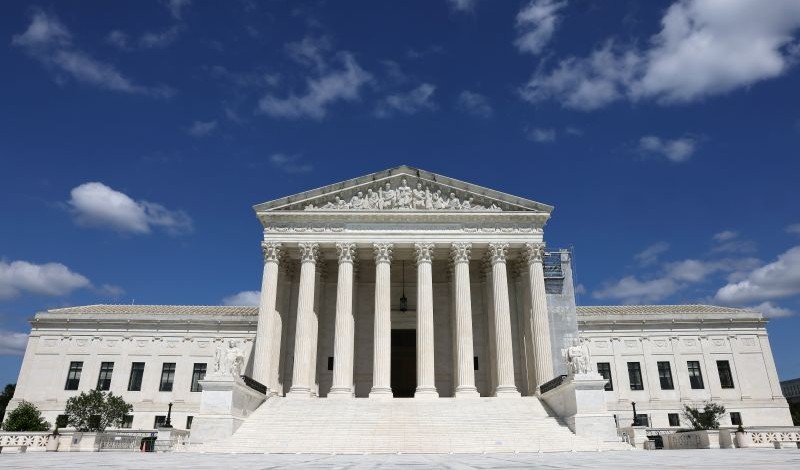
During the tenure of Chief Justice John G. Roberts, Jr., the U.S. Supreme Court has reshaped major areas of administrative law. Most notably, the Court overturned the Chevron doctrine under which courts deferred to reasonable agency interpretations of ambiguous laws. At the same time, the Court has declined to change long-standing securities law doctrine that governs private litigation.
What explains the Court’s apparent willingness to change administrative law doctrine while leaving securities law doctrine nearly untouched?The Roberts Court’s divergent treatment of administrative law and securities regulation reflects the Court’s priorities, argues David Zaring of the Wharton School of the University of Pennsylvania in a recent essay. According to Zaring, the Court is primarily worried about public law disputes—those concerning the power and structure of government agencies—and less worried about private law governing securities litigation between investors and managers.
Zaring posits that the Court’s concern with public law disputes stems not from an adherence originalism—a legal philosophy that relies on the original meaning of the U.S. Constitution—but instead from separation-of-powers concerns.
Chief Justice Roberts has stated that the administrative state “wields vast power” that the framers of the Constitution could not have envisioned. Other current justices have voiced similar concerns. Zaring claims that the Court worries that agencies have become too difficult to supervise and require greater presidential oversight.
Zaring identifies several recent Supreme Court decisions that exemplify the Court’s willingness to change administrative law doctrine to address its separation-of-powers concerns.
In 2024, the Roberts Court notably shifted its position on Chevron deference. The Court replaced Chevron deference with a rule that requires courts to exercise their independent judgment in deciding whether an agency has adhered to its statutory authority.
The Roberts Court has also announced the so-called major questions doctrine, which limits agencies’ ability to assert broad regulatory authority over matters of major economic or political significance without clear authorization from Congress. Zaring claims that the doctrine may constrain agencies that rely on old, broadly worded statutes to establish new regulatory policies.
The Roberts Court has also limited removal protections for government officials, making them more subject to presidential control.
Zaring observes that while making these and other changes to administrative law doctrine, the Roberts Court has left nearly all existing securities law doctrine governing private suits undisturbed—refusing to narrow the ability of investors or the government to enforce laws that regulate securities.
In 2016, the Roberts Court declined to reformulate or clarify a test for insider trading suits that requires proof that the insider-tipper’s actions will confer a benefit to establish liability. This test has been criticized for being overly complex and vague. Zaring argues that consistency with precedent was more important to the Court than reforms to insider trading laws.
The Roberts Court also refused to limit the use of shareholder class action suits that rely on the “fraud-on-the-market” theory. Under this theory, shareholders suing a corporation’s managers for damages resulting from misleading statements need not prove that they relied on them. Instead, shareholders need only prove that they relied on the stock price, which the theory holds reflects publicly made statements. In leaving the theory largely intact, the Court stated that only a “special justification” would warrant overturning a long-settled precedent.
Furthermore, the Court has decided not to alter the standard used to establish materiality—a showing that a party in a securities fraud case made a misrepresentation that would matter to investors. Zaring claims that the current standard for materiality is low and that opinions presented by publicly traded companies can serve as the basis for securities lawsuits.
According to Zaring, these examples of the Court’s refusal to alter securities regulation doctrine are not outliers.
Zaring argues that the Roberts Court’s reformist approach to administrative law, contrasted with its adherence to securities law precedent—as it relates to private litigation—reflects the Court’s differing views of public law and private law.
The Roberts Court is more concerned with the power of the state than with inefficiencies in the legal framework that governs private securities disputes, Zaring claims. When it comes to private disputes—such as disputes between the owners of a corporation and those who run it—the Court deems reform is unnecessary. When it comes to public law matters, however, Zaring claims that the Court wants to cut back on agency independence and afford new rights to entities subject to regulation.