
The Next Front for Reigning in Regulatory Preemption
The next logical step to limit the administrative state is shown by recent Supreme Court concurrences.

Skipping Asylum Interviews Will Not Fix the Asylum Backlog
DHS’s new rule shifts affirmative asylum claims into an overloaded, adversarial court system.
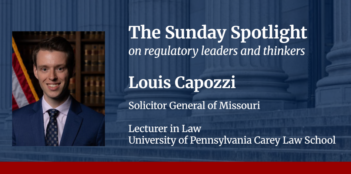
The Role of States in Shaping National Regulation
Louis Capozzi examines how state-level officials challenge and defend federal regulations.
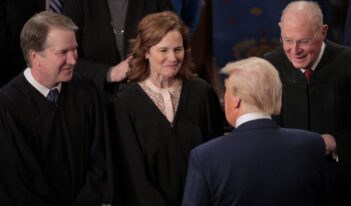
Orders, Injunctions, and Institutional Power
Scholar argues that the U.S. Supreme Court is using interim orders to maximize its own authority.

The True Value of Better Regulation Lies Beyond Simplification
Governments cannot ignore the indirect effects of regulations to reap their full benefits.

Regulatory Excellence in a Dynamic World
Cary Coglianese discusses how regulators can improve their performance in the face of pressing challenges.

A Small Win for Agency Adjudication
The Supreme Court upholds a high-stakes adjudication system, but important constitutional questions remain.

The Fate of Independent Adjudication and the Civil Service?
Slaughter and Cook rely on historical inaccuracies while raising new questions about agency independence.

Federal Spending Will Be the Next Big Separation-of-Powers Fight
The Supreme Court previews the constitutional clash over who controls federal spending.

Expanded Deference, Diminished Review, Relief Restricted
Urias-Orellana narrows asylum review, raising the stakes for judicial oversight.

Preserving the Adjudicative Capacity of Non-Article III Tribunals
After Trump v. Slaughter, can non-Article III tribunals survive presidential control?

EPA-Approved Pesticide Labels Reign Supreme
The Supreme Court’s Durnell decision strengthens federal control over pesticide warning labels.