
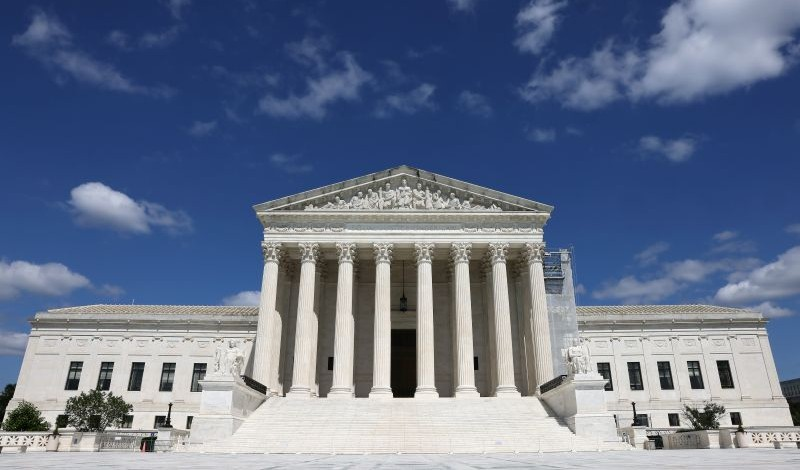
Weakening agency independence could make agency adjudication unconstitutional without judicial review.
Agencies adjudicate tens of thousands of regulatory disputes each year. For the past 80 years, those adjudications have been conducted through use of procedures that the U.S. Congress carefully crafted to ensure that the officers who preside over agency hearings are not biased. Parties are now attacking the constitutionality of agency adjudication in courts on a regular basis at the same time that courts are in the process of eliminating the statutory safeguards that ensure that the officers who preside over agency adjudications are not impermissibly biased in favor of the agency.
During the 1930s, many parties who appeared before agencies in adjudications complained that the officers who presided over those proceedings were biased, and studies supported the validity of those complaints. In 1946, Congress responded to those complaints by enacting the Administrative Procedure Act (APA). The APA includes several provisions that were carefully crafted to ensure that the administrative law judges (ALJs) who preside over agency adjudications—then called hearing examiners—are not biased in favor of the agencies where they preside. The most important of those statutory safeguards of decisional independence limited the power of an agency to remove an ALJ to circumstances in which the agency could prove that it had good cause to remove the ALJ.
In its 1950 opinion in Wong Yang Sung v. McGrath, the U.S. Supreme Court praised Congress for enacting the APA and suggested that the APA had codified the principles of due process. Recently, however, the Supreme Court has questioned the constitutionality of agency adjudication at the same time that it has threatened to eliminate the most important characteristic of agency adjudication that supports its constitutional validity.
In Jarkesy v. Securities and Exchange Commission, the U.S. Court of Appeals for the Fifth Circuit held that the U.S. Securities and Exchange Commission (SEC) cannot adjudicate securities fraud cases for several reasons: The statute that authorizes the SEC to adjudicate securities fraud cases violates the nondelegation doctrine, under which Congress cannot delegate its lawmaking power; securities fraud cases are so similar to common law fraud cases that the Seventh Amendment requires them to be adjudicated by a jury; and ALJs cannot serve as agency adjudicative officers because they can only be removed for cause.
The Supreme Court initially agreed to hear Jarkesy on appeal to review all three of the Fifth Circuit’s holdings. In its 2024 opinion, however, the Supreme Court decided only that the Seventh Amendment prohibits the SEC from adjudicating securities fraud cases. Without explanation, it left intact the Fifth Circuit’s holding that ALJs cannot serve as adjudicative officers because they can only be removed for cause.
In its 2026 opinion in Trump v. Slaughter, the Supreme Court held that the for-cause limit on the President’s power to remove the commissioners of the Federal Trade Commission is unconstitutional. In its opinion, the Supreme Court explicitly included adjudication among the agency functions that must be performed by an officer who is subject to at-will removal by the President. The Court’s silent acquiescence in the Fifth Circuit’s holding in Jarkesy, combined with the reasoning in the Court’s opinion in Slaughter, strongly suggest that the Court will soon hold that ALJs must be removable at will.
In its 2018 decision in Lucia v. Securities and Exchange Commission, the Supreme Court had already given agency heads the power to appoint ALJs by holding that ALJs are officers who can only be appointed by heads of agencies. President Donald J. Trump followed that Supreme Court decision with an executive order that eliminated the merit-based system of choosing ALJs that the Office of Personnel Management had long administered. The executive order also gave agency heads complete discretion to appoint as ALJs anyone who is a member of the bar of any state or the District of Columbia.
I have consistently argued that agency adjudication is constitutionally permissible in my scholarly writing and in amicus briefs. If, as seems inevitable, the Supreme Court holds that ALJs can be removed at will, I will reluctantly change my position on that issue. The combination of complete discretion to appoint ALJs and complete discretion to remove ALJs would create a system of adjudication that clearly violates due process.
Unlike ALJs, immigration judges have long been agency adjudicative officers who can be appointed or removed at will. The present status of immigration judges illustrates the kind of impermissibly biased system of adjudication that Presidents can create in any context if they have complete discretion to hire and fire ALJs at will.
As part of his attempt to deport all of the millions of undocumented immigrants expeditiously, President Trump has removed over one hundred immigration judges reportedly because he thought that they were granting too many petitions for asylum and refusing to deport too many undocumented immigrants. He has also appointed hundreds of new immigration judges with no prior experience or training in immigration law. He has placed the new immigration judges in a new training program in which they are taught only how to write decisions that deny petitions for asylum and that order immigrants to be deported.
The resulting system of adjudication is unacceptably biased. It clearly violates due process. If the Court holds that ALJs can be removed at will, I will reluctantly change sides and argue that the resulting system of agency adjudication is unconstitutional because it violates due process. If the courts continue to permit President Trump to implement the pervasively biased system of agency adjudication that he has created in the immigration context and the Supreme Court holds that ALJs must be removable at will, any President can replicate such a system in any context.
The Supreme Court’s 2026 decision in AT&T v. Federal Communications Commission provides one potential way in which agency power to adjudicate disputes can be preserved. The Court upheld the power of the Federal Communications Commission to adjudicate some types of disputes because the Commission decision at issue could not be enforced without first providing a court exercising judicial power under Article III of the U.S. Constitution with the opportunity to engage in an independent review of the agency’s decision.
If the Court eventually holds that ALJs can be removed at will, Congress should amend the APA to authorize all agencies to adjudicate disputes subject to independent review by an Article III court. That would create a system of agency adjudication that imposes heavy burdens on the federal judiciary and is less effective and less efficient than the system that we have had for the past 80 years, but the availability of independent review of all agency adjudicatory decisions by an Article III court would save agency adjudication from a holding that it violates due process.