
The Trump Administration has overlooked the historical benefits of automotive fuel efficiency standards.
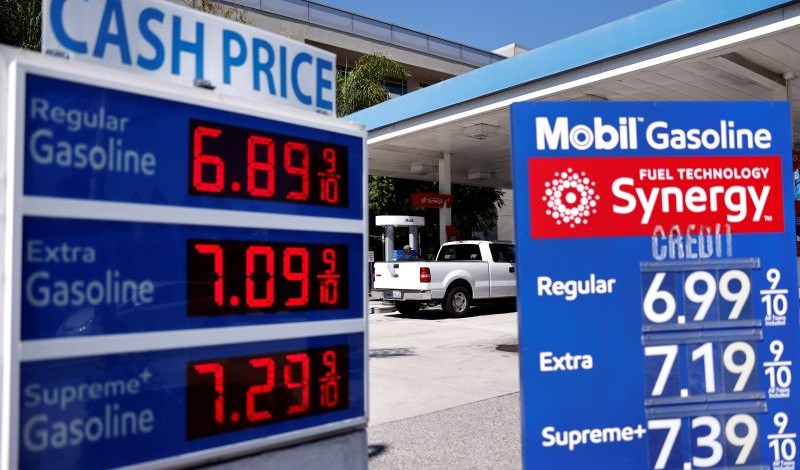
One of the clearest lessons from the Iran war is that the United States’ dependence on oil remains a serious vulnerability. The war sent gas prices soaring, costing American drivers an estimated $34 billion at the pump. Although gas prices are, for now, falling, the last few months should be a wake-up call that we need policies to protect American families from the next oil supply shock. Instead, the Trump Administration is falling asleep at the wheel: It is moving to dismantle federal standards that make driving less expensive by forcing automakers to sell cars that use less fuel. Rolling back these requirements would be a costly mistake.
We have been down this road before, and we should not forget lessons from that past. About 50 years ago, oil-producing countries in the Middle East imposed an oil embargo on the United States in response to its support for Israel during the 1973 Yom Kippur war. After oil prices skyrocketed, the U.S. Congress passed a bipartisan bill: the Energy Policy and Conservation Act. With this law, Congress intended to reduce our dependence on oil—especially foreign oil—by conserving energy. To achieve this objective, Congress included a provision in the law that requires U.S. automakers to make new cars more fuel efficient.
Over the past several decades, these federal requirements—known as vehicle “fuel economy standards”—have saved well over 1.5 trillion gallons of gas and have saved American drivers trillions of dollars in fuel costs. In the 1970s, the average new vehicle in the U.S. could drive just 13 miles on one gallon of gas. By 2023, the average new vehicle could drive 27 miles per gallon—a twofold increase. In other words, if federal law had not forced automakers to make vehicles more fuel efficient, the current Iran war would be having a much greater impact on Americans’ pocketbooks.
Fuel economy requirements have other important benefits, too. When cars use less fuel, they also create less pollution, protecting public health and the climate. The most recent fuel economy requirements issued by the Biden administration, which the Trump administration plans to revoke, are expected to prevent more than 710 million metric tons of planet-warming CO2 emissions, which is roughly equivalent to taking half of all cars in the United States off the road for one year. They will also reduce Americans’ exposure to unhealthy air pollution that causes asthma, cardiovascular disease, and other illnesses.
The short of it is that vehicle fuel economy standards are a no-brainer: They save consumers money at the pump, reduce dangerous air pollution, strengthen our energy independence, and make us less vulnerable to foreign conflicts in oil producing regions. As gas prices rise, and refueling cars becomes even more expensive for American drivers, federal fuel economy requirements are even more essential.
Which is why it makes little sense that the Trump Administration is trying to scrap fuel economy standards. In December, the Department of Transportation proposed eliminating existing fuel economy requirements for passenger cars and light trucks, which require automakers to achieve an average of 50.4 miles per gallon by 2032, projected to save drivers more than $23 billion in fuel costs.
The Transportation Department’s new proposed fuel economy standards, which would replace the Biden-era requirements, are below even what today’s vehicle fleets already achieve. In other words, they would allow automakers to make new vehicles that consume more fuel than vehicle fleets already on the road. In a January letter to automakers, the Transportation Department indicated that it plans to similarly weaken fuel economy requirements for heavy-duty trucks and vans.
President Donald J. Trump and agency officials have blamed fuel economy standards for higher car prices, touting the Administration’s efforts to get rid of these requirements as saving Americans money. But a 2023 analysis by Consumer Reports found no evidence that fuel economy standards have increased car prices, and the Transportation Department’s own analysis performed last year shows that weakening fuel economy requirements will increase costs for American drivers—by hundreds of dollars. And that analysis was done before fuel prices skyrocketed. The Administration also claims that American consumers do not want to buy more fuel-efficient cars, despite evidence that hybrids are more popular than ever before.
In its December 2025 proposal to eliminate the existing fuel economy standards, the Trump Administration also argued that conserving fuel is no longer as important because the United States is now a net oil exporter. But the United States still imports approximately 6 million barrels of crude oil per day, and because oil prices are based primarily on global supply and demand, foreign supply shocks can greatly increase the cost of oil in the U.S. The current conflict in the Middle East—and resulting oil market shocks—have proven that federal laws designed to reduce our reliance on oil remain important and necessary to protect American consumers.
In the 1970s, Congress foresaw a future when the United States’ oil dependence could lead to another economic crisis, and it directed the President to take actions to enhance energy conservation to protect the American public. Now is not the time to abandon that directive. If the Trump Administration wants to keep our country secure and families’ fuel bills in check, it should keep the existing strong fuel economy standards firmly in place.