Scholars argue that securities law can mitigate the risks posed by bank-like financial institutions.
The financial crisis of 2008 revealed the devastating consequences that major bank failures can impose on the U.S. economy. Today, banking regulations help to protect against financial catastrophe—but many institutions that look and act like banks remain under-regulated, according to a recent article by Gabriel V. Rauterberg and Jeffery Y. Zhang, professors at the University of Michigan Law School.
Rauterberg and Zhang warn that regulators must pay greater attention to shadow banking, or bank-like business practices that fall outside of banking laws, in order to prevent financial crises. They point to securities regulation as a possible solution, arguing that many shadow banking methods already fall under broad securities laws.
Rauterberg and Zhang define shadow banks as “financial institutions that function like banks but operate outside the scope of banking law.” Rauterberg and Zhang note that, like traditional banks, shadow banks issue short-term debt, which their investors can demand back at almost any time, and use that debt to fund long-term loans. Shadow banks thus face the same danger as do traditional banks: a run, or a period in which “investors demand their money or money-like claims back abruptly and en masse.”
Banking regulators have “developed an elaborate set of safeguards” to mitigate the danger of bank runs—but those safeguards do not apply to shadow banks. This regulatory gap makes shadow banks perhaps “the single greatest challenge facing financial regulation” in Rauterberg and Zhang’s view. They contend that shadow banking was at “the heart of” the 2008 financial crisis.
As much as they warn that shadow banks need greater regulation, Rauterberg and Zhang do not see expanding banking regulations to cover shadow banks as a viable solution. They explain that banking law adopts “a narrow and formalistic definition of banking.” To bring shadow banks within the authority of banking regulators, Congress would need to expand that authority legislatively—an expansion that has “failed to materialize.”
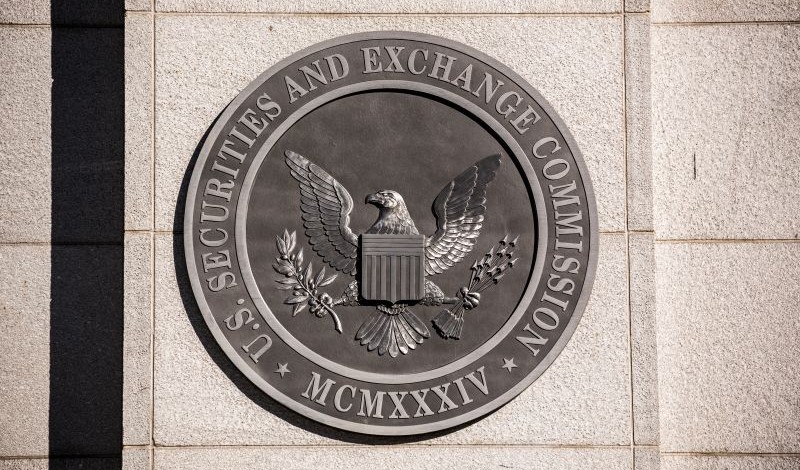
Rauterberg and Zhang suggest a different solution: securities law. They explain that securities regulations are much broader than banking regulations, with “a set of open-ended, capacious, and functional definitions” that “end up encompassing almost all financial investments.” Because these expansive regulations give broad authority to the U.S. Securities and Exchange Commission (SEC), most of the shadow banking industry already falls under the purview of existing securities laws, they argue.
Rauterberg and Zhang provide examples of the kinds of shadow banks that the SEC can regulate, including money market funds, which buy and hold short-term debt and serve as substitutes for banks, and cryptocurrency lending platforms, which accept cryptocurrency deposits and use them to make profitable loans like traditional banks do with normal currency.
The SEC has not only the legal authority but also the practical capacity to regulate shadow banks, Rauterberg and Zhang posit. They note that the SEC generally maintains a “robust track record of enforcement” in other areas. And, because securities laws give the SEC such broad authority, Rauterberg and Zhang suggest, the agency can regulate shadow banks confidently, without fear of political friction. In Rauterberg and Zhang’s view, the SEC should simply “dial up its regulatory stringency” with respect to shadow banking.
Rauterberg and Zhang acknowledge that securities law may not be the single best regulatory tool for addressing shadow banks. The SEC is “not the nation’s monetary authority,” and it does not possess unlimited regulatory power, they explain. Certain tools for regulating bank-like conduct, such as insuring deposits and minimum capital requirements, are best left to banking regulators such as the Federal Reserve and the Federal Deposit Insurance Corporation, Rauterberg and Zhang argue.
Even so, Rauterberg and Zhang conclude that increased regulation of shadow banking under securities law is worth a try. Securities regulators must step in where banking laws have failed to expand, they insist, because shadow banking threatens to cause a “a real financial crisis” if left unchecked.