
New poultry and swine processing rules misapply a recent Supreme Court decision and ignore worker safety.
The second Trump Administration has implemented so many changes to regulatory decision-making that keeping up can be difficult. But a pair of recently proposed rules try a regulatory sleight of hand that should not escape attention. One agency, faced with demands to deregulate in ways that are hard to justify, is now claiming it can ignore inconvenient facts altogether.
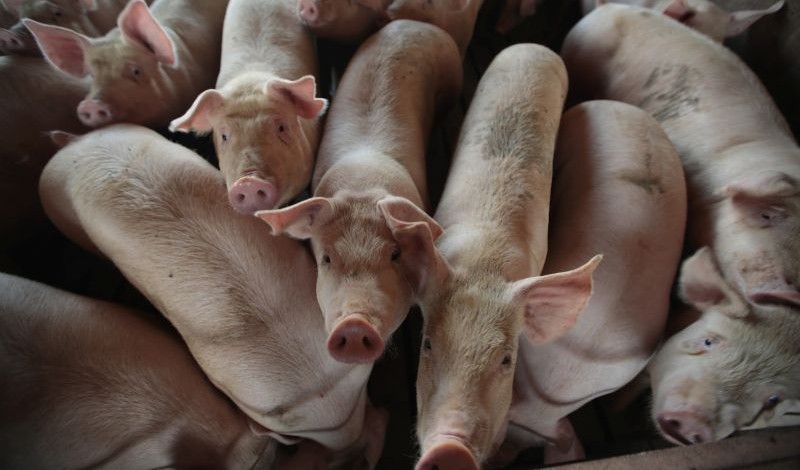
For years, the Food Safety and Inspection Service (FSIS)—part of the U.S. Department of Agriculture—has limited processing line speeds at poultry and swine slaughterhouses. It has done so partly to protect workers—some of the poorest and most vulnerable among us—from the obvious hazards of working at breakneck speeds in facilities designed to kill and dismember.
Now, FSIS has decided it lacks the statutory authority to regulate in service of worker safety. That task, according to two proposed rules, is the Occupational Safety and Health Administration’s exclusive domain. If finalized, the rules would set much higher line-speed limits for poultry and eliminate line-speed limits for swine.
FSIS defends these decisions in regulatory preambles that span dozens of crammed Federal Register pages. What do these long preambles need to say about worker safety? According to FSIS, nothing at all.
To understand why, we need to start with the U.S. Supreme Court’s 2025 decision in Seven County Infrastructure Coalition v. Eagle County, Colorado. Justice Brett Kavanaugh’s majority opinion suggested that, for purposes of the National Environmental Policy Act (NEPA), agencies’ analyses of their actions’ environmental impacts generally do not need to consider the effects of projects separate from the very concrete changes over which the agencies have direct regulatory authority.
In that case, the Surface Transportation Board approved the construction and operation of an 88-mile, oil-transporting railway line in Utah. The majority opinion clarified that the agency’s environmental analysis could permissibly ignore the consequences of projects that were uncertain, geographically and temporally separate from that railway line, and “outside the Board’s authority.”
The proposed line-speed rules take that holding and dial it up to eleven. FSIS claims that, because worker safety is, allegedly, beyond its statutory remit, under Seven County, the agency does not need to mention that factor at all.
This analysis is a complete nonstarter. For one thing, Seven County reaches only NEPA analyses. What is true for those analyses is plainly not true of all analyses.
Besides, worker safety is hardly like the ignorable “upstream” and “downstream” effects in Seven County. Faster line speeds hurt workers with great certainty right at the regulated slaughter lines themselves. The causal link between faster line speeds and hurt workers is, in the terms of Seven County, plainly “proximate.”
Furthermore, even if the statutes that empower FSIS do not mention worker safety, that factor could still help inform the agency’s regulatory standards some. By FSIS’s logic, even if it discovered that faster line speeds would maim every single slaughterhouse worker, that discovery could not possibly change a thing. Clearly, agencies need to be able to consider extra-statutory factors to some degree, as the U.S. Court of Appeals for the D.C. Circuit has long held.
Indeed, as the Supreme Court has made clear for decades, an agency cannot simply ignore “an important aspect of the problem,” even when that is inconvenient for the President’s agenda. That holds especially true when, as FSIS admits, the agency used to rely on that exact factor to justify different regulatory standards. The Administrative Procedure Act’s reasoned decision-making requirement requires agencies to recognize, report, and defend the harmful effects that will stem from reversing course—even when the agency’s initial stance might have been illegal. Here, it is far from obvious that FSIS’s previous line-speed limits were illegal, but even if they were, the agency owes the public the decency of admitting how its new position will hurt them.
Yet FSIS takes its tortured reading of Seven County even further. The agency seems to think that the decision excuses it from considering worker safety even within the rules’ benefit-cost analyses. Never mind that Executive Order 12866—which has been in constant effect since 1993—tells agencies to maximize net benefits to society whenever statutes allow. And never mind that the George W. Bush-era guidance on agency benefit-cost analysis tells agencies to consider all effects—including so-called “indirect” or “ancillary” ones. Even the short-lived 2023 update to this guidance agreed.
This clear “everything counts” directive makes sense. No economically important difference exists between effects that a statute places directly within an agency’s hands and other effects. The vulnerable slaughterhouse workers who are injured or worse because of FSIS’s indifference will not be comforted by the agency’s reading of the statute. Those effects are real and important, and every President since Bill Clinton has agreed that agencies must own them in their benefit-cost analyses. So, agency benefit-cost analyses must report all harms and forgone benefits before they impose them on the public.
In a further display of contempt for longstanding reasoned-decisionmaking requirements, FSIS’s proposed rules essentially ignore animal welfare, even in their benefit-cost analyses. That is even though faster line speeds raise the likelihood of painful mistakes at slaughter, the Department of Agriculture has monetized animal welfare in benefit-cost analyses for regulations that benefit animals, and the Humane Methods of Slaughter Act places animal welfare at slaughter squarely within FSIS’s ambit, at least for swine, meaning even the agency’s misguided Seven County argument cannot save it.
Seemingly recognizing how untenable its reading of Seven County is, FSIS falls back on halfhearted gestures toward worker safety—suggesting against all odds that raising line speeds affects worker safety negligibly, if at all. That argument goes nowhere, for reasons two colleagues and I detail in a pair of public comment letters to FSIS. Academic literature confirms what common sense suggests: Forcing people to work more quickly makes injuries more likely. FSIS concludes otherwise mainly through a tortured interpretation of a single study.
But the broader point is that FSIS’s reading of Seven County stretches its holding beyond all recognition. It runs roughshod over longstanding reasoned decision-making requirements. Finding this regulatory approach unacceptable should be a no-brainer for courts, advocates, and anyone who cares about good government.