
Greater regulation of university speech and research threatens U.S. supremacy in higher education.
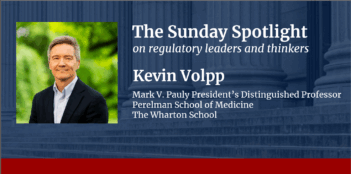
In 2016, I had the privilege of serving on a National Academies of Sciences, Engineering, and Medicine committee charged with examining the burden of government regulation on university research. The committee produced a report that recommended both changes to existing regulations and to the entire regulatory system to ensure that new regulations take into account the historic partnership between government and research institutions.
Although some regulatory streamlining took place after the issuance of the 2016 report, particularly around human subject protection, additional burdens on universities have been added to the already large set of requirements for federal grant recipients. According to the Council on Government Relations, 62 percent of regulations issued since 1991 have been enacted in the last decade. As a result of this growing trend, the National Academies again convened a committee this spring to address this important topic, and again I served as a member of the committee. In September, the committee issued its report.
The committee that authored the 2025 report recognized that regulation has a fundamental role to play in university research. Many public interests, including ensuring security, protecting human and animal subjects, and avoiding financial conflicts of interest, are served by government regulation. The research enterprise, however, is ridden with duplicative requirements that create burdens without serving an obvious purpose and cause delays that can stretch from weeks to months. These requirements lead to slowdowns in research that result in delays to innovative research that could produce significant public benefits and perhaps discourage researchers from pursuing that research in the first place.
The report highlights three overarching principles for improving federal regulation of the research enterprise. The first, not entirely under the control of the federal government, is to better harmonize state and federal regulations. The second is to adopt a principle of minimal regulation where there is minimal risk. Finally, the report reflects the hope that technological advances, particularly artificial intelligence, can be used to streamline regulatory compliance for universities.
The committee took a relatively unique approach of presenting options for improvement in the regulatory system rather than making explicit recommendations. The committee presented 53 options for improvement across the vast scale of areas covered by the regulation of research. For each option, the final report details the pros and cons of that possible approach.
The options run the gamut and include extremely general government-wide reforms—such as echoing the 2016 report’s call for a research policy board that would be composed of members of research agencies and academic institutions and would make recommendations regarding regulation of academic research, and changes in specific regulations. For an example of this latter category, the options for revising financial conflict of interest regulations include harmonizing policies and procedures across agencies, increasing the threshold of a significant financial interest for the Public Health Service, and eliminating reporting of financial conflicts of interest and determinations of bias to the Public Health Service.
The Trump Administration has put forward several goals that make the timing of the report possibly effective. The rhetoric around “making America great again” could be applied to re-emphasizing one of the greatest governmental accomplishments in the post-World War II era: the flourishing of American universities and their preeminence in academic research in the world. Furthermore, the deregulatory priorities of the Trump Administration dovetail with many of the recommendations in the report.
The Administration, however, has made attacks on major research universities a staple of its first year in office. Such attacks often include the imposition of new requirements about how universities must police speech and what subjects of university research should receive government funding. The Administration has also proposed reducing facilities and administrative costs in grants to universities. This reduction will make research harder, but this impact could be mitigated by adopting some of the options in the report.
The National Academies’ report points the way for the current government to achieve several of its goals. It is not a coincidence that 37 of the top 100 universities—and 13 of the top 20—worldwide are in the United States. Sensible streamlining of regulation could ensure that this supremacy is not challenged and could even help it grow. But greater regulation of university speech and research is likely to diminish it.

This essay reflects the author’s own views and not those of the National Academies or the committee that wrote the report it addresses.