Scholars discuss how unsettled climate policies reduce international trade and foreign direct investments.
As temperatures rise and the climate worsens, most countries have adopted strong environmental regulations to achieve net-zero carbon emissions and avoid a 1.5 degrees Celsius increase to the temperature of the atmosphere.
Only four countries—Iran, Libya, Yemen, and the United States—have not joined the international climate change treaty known as the Paris Agreement. Of them, the United States is the only country that has joined and then withdrawn from the treaty, and it has done so twice.
This uncertainty in the United States’ climate policy is decreasing both the country’s international trade and foreign direct investments, argue Babatunde Sunday Eweade and Hasan Güngör of Cyprus’s Eastern Mediterranean University in a recent article.
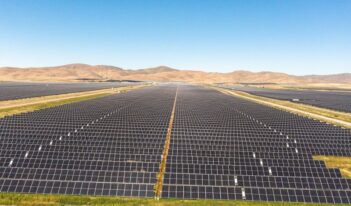
Increased development and adoption of renewable energy can alleviate the consequences of global warming, contend Eweade and Güngör. Building renewable energy projects, however, requires steep investments and open international trade. They argue that understanding the factors influencing foreign direct investments and how much countries are engaging in international trade is necessary to ensure the success of renewable energy development.
Although trade openness and foreign direct investment are influenced by many factors, such as infrastructure development, political instability, and technological innovation, Eweade and Güngör sought to determine the extent that uncertain climate change policy reduced international trade. They focused their study on the United States because of its influence on the global stage, its role in shaping international policy, and the fact that it is the world’s largest carbon dioxide emitter.
Over the past four presidential administrations, the United States has gone back and forth between strict and relaxed environmental regulations. Eweade and Güngör contend that this unpredictability in the development, implementation, and enforcement of environmental regulations creates climate policy uncertainty.
Eweade and Güngör found that international actors decreased their trade openness with, and foreign direct investments in, the United States due to the increased perceived risk from the climate policy uncertainty. This is worsened by a tangential hesitancy to invest in or trade for non-renewable energies.
Not only would increasing renewable energy investments have a meaningful impact on opening trade and attracting international investments, but Eweade and Güngör contend it would also result in significantly increased economic growth for the United States.
Based on their findings, they recommend several policy actions. The United States should adopt clear and consistent climate policies to mitigate the uncertainty and risk warding off foreign investments, and the nation should incentivize and invest in clean energy infrastructure for various renewable energy technologies while phasing out its current subsidies for fossil fuel industries.
Eweade and Güngör argue that the United States can only achieve sustainable economic growth if it adopts financial incentives for the research and development of clean energy technologies, as well as technology transfer initiatives to drive innovation in renewable energy across global leaders.
Sustainable growth and trade liberalization policies are necessary for the United States’ long-term economic expansion, and Eweade and Güngör contend that the best policies to achieve these objectives are ones that invest in infrastructure, research and development, and education.
Although the initial study focused on the United States, they argue that their results indicate a general trend across all countries. The best way for a country to encourage economic growth, increase trade with other countries, and invite foreign investment is to adopt stable regulations supporting renewable energy development.
Eweade and Güngör recommend that all nations work together to maximize synergies across energy, trade, and environmental policies. And the best way to align policies is for governments to establish coordination across industries, conduct policy impact assessments on domestic and global scales, and consult stakeholders to ensure the success of proposed regulations.
Due to the long-term necessity of adequate climate change policies, Eweade and Güngör advocate that stable economic policies should be adopted quickly to mitigate the worst impacts of climate change.