
The Supreme Court strikes down Louisiana’s electoral map, court rules on Trump Administration’s immigration detention policy, and more…
IN THE NEWS:
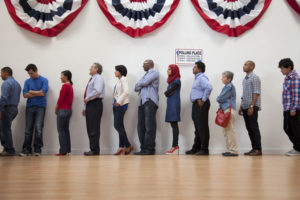
- The U.S. Supreme Court ruled that Louisiana’s current electoral map is “an unconstitutional racial gerrymander.” In Louisiana v. Callais, the Court heard a challenge to the state’s redrawn electoral map, which was drafted after a successful prior suit by minority voters who alleged racial discrimination in violation of Section 2 of the Voting Rights Act. The Court held that Louisiana’s redrawn map, which created a second “majority-minority” district, was unconstitutional because Section 2 only prohibits redistricting upon “strong evidence” of intent to discriminate because of race. The Court found that a map does not violate Section 2 “because it fails to provide a sufficient number of majority-minority districts,” stating that this would otherwise “create a right that the Fifteenth Amendment does not protect.” In her dissent, Justice Kagan argued that the decision “eviscerates” Section 2 because the statute only requires proof that redistricting “results in” a discriminatory electoral system.
- A federal appeals court ruled that the Trump Administration cannot subject most immigrants facing deportation to mandatory detention without the opportunity to seek release on bond. The Trump Administration adopted a new interpretation of immigration law in July 2025, treating all immigrants who entered the country without authorization—regardless of how long they had resided in the United States—as “applicants for admission” subject to mandatory detention. The U.S. Court of Appeals for the Second Circuit concluded that the government’s reading of the Illegal Immigration Reform and Immigrant Responsibility Act of 1996 “defies the statute’s context, structure, history, and purpose” and would amount to the “broadest mass-detention-without-bond mandate” in the nation’s history. The Second Circuit’s ruling conflicts with decisions by the U.S. Court of Appeals for the Fifth Circuit and Eighth Circuit that have upheld the mandatory detention policy.
- The Federal Communications Commission (FCC) ordered the American Broadcasting Company (ABC) to file early broadcast license renewal applications for the local television stations it owns within 30 days, which were not scheduled to come up for renewal until at least 2028. The FCC stated in its order that it has been investigating the ABC stations for possible violations of the Communications Act of 1934 and FCC rules, including the agency’s prohibition on unlawful discrimination. FCC Chair Brendan Carr cited concerns about diversity, equity, and inclusion practices at Disney, ABC’s parent company. The order arrived after President Donald J. Trump and First Lady Melania Trump condemned ABC and called for the firing of ABC late-night host Jimmy Kimmel.
- In an open letter to federal grantees, the Substance Abuse and Mental Health Administration (SAMHSA) announced that federal funds cannot be used to purchase or distribute fentanyl test strips, as part of a broader move away from “harm reduction” strategies. SAMHSA, however, noted that this ban does not apply to public health officials, law enforcement, or other healthcare professionals that use fentanyl test strips in a professional setting. SAMHSA stressed that federal funding should be used to support “common-sense public health strategies,” and explained that federal funds could instead be used for opioid overdose reversal supplies such as naloxone, overdose reversal training, and other infectious disease prevention services.
- The U.S. Food and Drug Administration (FDA) announced a series of regulatory actions to accelerate the development of psychedelic-based treatments for serious mental illness, following an executive order signed by President Trump directing the U.S. Department of Health and Human Services to expand access to treatments for complex and treatment-resistant conditions. FDA issued priority vouchers to companies investigating the use of psilocybin—a hallucinogenic compound found in some mushrooms—for treatment-resistant depression and major depressive disorder, and methylone—a stimulant similar to MDMA—for post-traumatic stress disorder. The agency also cleared an early-phase clinical study of noribogaine hydrochloride—a psychoactive compound derived from a shrub—to move forward as a potential treatment for alcohol use disorder, marking the first such authorization in the United States. FDA noted that this clearance does not constitute a finding of safety or efficacy.
- President Trump fired the entire National Science Board (NSB), which helps lead the U.S. National Science Foundation (NSF) and serves as an independent body of advisors to Congress and the President on science and engineering policy. The NSB is normally composed of 25 members who serve staggered six year terms and are appointed by the President on the basis of their scientific qualifications and their prior “distinguished service.” The firing follows prior attempts by the Trump Administration to cut the NSF’s budget by $9 billion for 2026, although these cuts were rejected by Congress.
- FDA announced new efforts in implementing real-time clinical trials, which transmit clinical data to the agency in real time. As part of this initiative, FDA launched two “proof-of-concept” real-time clinical trials with AstraZeneca and Amgen. FDA also released a request for information to seek input on design, implementation, and metrics for a future real-time clinical trial pilot program. In support of these actions, FDA Commissioner Marty Makary stated that real-time clinical trials will “help us accelerate promising therapies, and build toward our ultimate goal of running real-time, continuous trials across all phases of drug development.”
- The U.S. Environmental Protection Agency (EPA) released new interim guidance on the destruction and disposal of per- and polyfluoroalkyl substances (PFAS). The guidance recommends the use of disposal technologies with less potential to release PFAS into the environment, such as using injection wells for long-term storage, disposing PFAS in designated hazardous waste landfills under the Resource Conservation and Recovery Act, and using certain hazardous waste combustors. EPA Administrator Lee Zeldin noted that these recommendations reflect “the best available gold-standard science.” The interim guidance also provides a framework for evaluating the safety and effectiveness of new tools to safely destroy or dispose of PFAS.
WHAT WE’RE READING:
- A recent report by the U.S. Government Accountability Office (GAO) investigated incorrectly made and overpaid payments by the federal government in 2025. The Payment Integrity Information Act of 2019 requires each agency’s inspector general to report on compliance annually. GAO audited these reports and estimated that in 2025 agencies’ improper payments totaled $186 billion, with $153 billion consisting of overpayments. The programs resulting in the largest improper payments were Medicare—$57 billion, Medicaid—$37 billion, the Earned Income Tax Credit program—$21 billion, the Supplemental Nutrition Assistance Program—$10 billion, and the Shuttered Venue Operators Grant program—$10 billion. GAO also described the most common recommendations made by agency inspector generals for reducing improper payments.
- In a National Bureau of Economic Research working paper, Yaa Akosa Antwi, a professor at the Johns Hopkins University Carey Business School, Marion Aouad, a professor of economics at the University of California, Irvine, and Nathan Blascak, a researcher at the Federal Reserve Bank of Philadelphia, examined the consequences of a California law that capped hospital charges for lower-income patients without health insurance and patients with burdensome medical bills, at rates no higher than those paid by government programs such as Medicare and Medicaid. Antwi, Aouad, and Blascak used credit data and medical debt records to compare financial outcomes for adults in California counties with differing rates of health insurance and in neighboring states without similar laws capping hospital charges. The authors found that the law reduced the likelihood of having non-medical debt in collections and improved credit scores, but did not produce statistically significant reductions in medical debt collections. Antwi, Aouad, and Blascak concluded that hospital billing regulations can generate improvements in the financial wellbeing of vulnerable populations that are more likely to lack health insurance.
- In a recent Brookings Institution report, Aaron Klein, the Miriam K. Carliner Chair at Brookings Economic Studies, and Chris Hughes, the chair of the Economic Security Project, argued that the Federal Home Loan Bank (FHLB) system must be reformed in order to carry out its original mission of boosting homeownership and advancing the development of affordable housing. The FHLB is a banking cooperative system regulated by the Federal Housing Finance Authority (FHFA) that now serves as a method for large commercial banks and insurance companies to borrow on low rates and receive bailouts when necessary. Klein and Hughes contended that Congress should implement requirements to transition greater percentages of FHLB lending to housing, mandate that at least 20 percent of units in FHLB-financed projects be dedicated to affordable housing, and focus lending on multifamily rentals. Klein and Hughes also argued that Congress should grant new, explicit authorization for the FHLB to directly lend to housing developers, as opposed to their current model of lending to financial institutions.
EDITOR’S CHOICE:
- In an essay in The Regulatory Review, Michael S. Kang, a professor at Northwestern University Pritzker School of Law, argued that the U.S. Supreme Court’s decisions in Gill v. Whitford and Benisek v. Lamone during the 2017-2018 term signaled “an end to any new constitutional restraints on partisan gerrymandering.” Kang described the gerrymandering process whereby elected officials redraw electoral maps—“packing” favorable districts with friendly voters and “cracking” politically unfriendly ones. He argued that the then-upcoming retirement of Justice Anthony Kennedy—the only conservative justice willing to potentially curb partisan gerrymandering—would only increase the Court’s “hostility to judicial oversight of the political process.” Kang also claimed that the Court’s procedural rulings in Gill and Benisek signaled its unwillingness to take on the merits of partisan gerrymandering and would set the stage for later decisions “dismissing judicial intervention as too complicated and subjective.”