
President Trump signs executive order removing protections for federal workers, Florida sues OpenAI, and more…
IN THE NEWS:
President Donald J. Trump signed an executive order directing the U.S. Office of Personnel Management to remove the job protections of nearly 8,000 federal workers in senior policymaking positions. The measure facilitates the removal of federal workers for alleged poor performance or misconduct by reclassifying them as at-will employees. Although the Office of Personnel Management contends that this action will improve employee accountability in a nonpartisan manner, experts argue that it could contribute to political polarization in the government. The order directs agencies to conform with personnel changes within seven days.
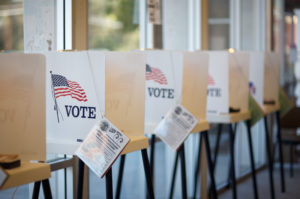
The U.S. Supreme Court ruled that Alabama may use a 2023 congressional redistricting map in special primaries scheduled for August 11, overriding a three-judge federal panel that found that the map intentionally discriminated against Black voters in violation of the Constitution. The majority found that the lower court had departed from a recent U.S. Supreme Court decision, which established new standards for considering race under the 1965 Voting Rights Act. The ruling reduces the number of majority–minority congressional districts in Alabama from two to one. Three dissenting justices argued that the order will harm minority voter representation.
President Trump reportedly announced that he intends to nominate acting U.S. Attorney General Todd Blanche to take over the position permanently. The decision comes two months after the President fired former Attorney General, Pam Bondi. Recently, Blanche has spearheaded the Department of Justice’s now failed attempt to establish an “Anti-Weaponization Fund” for potential victims of “weaponization and lawfare.” Blanche faces a confirmation hearing before the U.S. Senate once President Trump nominates him. The controversial fund may influence his nomination process, as he needs nearly full Republican support in the Senate to be confirmed.
The U.S. Securities and Exchange Commission (SEC) proposed the rescission of rules that require public companies to provide certain climate-related information in the companies’ registration and annual reports. The SEC stated that the current rules requiring public companies to provide these disclosures were an overstep of the agency’s power. SEC Chairman Paul Atkins issued a statement about the proposed recissions, claiming that the rescissions would put an end to the multiple legal challenges filed against the rules since the rules were adopted two years ago.
The Centers for Medicare and Medicaid Service (CMS) issued an interim final rule that requires certain adults who are not entitled to enroll or not enrolled in Medicare and are covered by Medicaid to work 80 hours per month as a condition of eligibility. Individuals can meet the requirement by working, completing community service, participating in a work program, or by enrolling in an educational program for at least half time. In a press release, CMS stated that pregnant people, people with disabilities, and parents or caregivers to young children, among others, will be exempt from the 80-hour requirement. CMS intends the rule to support state investment in technology and data integration to allow for greater efficiency in the application process.
The Bureau of Land Management and the Department of the Interior proposed revisions to federal regulations governing livestock grazing on approximately 155 million acres of public land across the United States. The agencies stated that the proposal would reduce regulatory burdens on ranchers and strengthen rural economies across the West. The proposed rule would give grazing permittees more flexibility to respond to changing landscape conditions by updating definitions, streamlining administrative processes, and clarifying regulatory language. The rule would broaden rangeland health standards to cover all Bureau of Land Management programs and ensure that responsibility for maintaining healthy public lands is shared by all land users rather than grazing permittees alone. The proposal would represent the first major update to grazing regulations since 1995.
The U.S. Department of Agriculture announced a suspected case of New World screwworm, a parasitic fly that lays eggs in open wounds, in South Texas, prompting the agency to activate its domestic readiness and response strategy. The strategy centers on restricting livestock movement across the U.S.Mexico border, enhancing inspection of live animals at ports of entry, and coordinating with the Environmental Protection Agency and the Food and Drug Administration to remove regulatory hurdles blocking access to wound treatment products. The Department of Agriculture announced $8.5 million in funding for a sterile insect dispersal facility in South Texas and $21 million to expand sterile fly production capabilities in Mexico. The announcement came one day after Secretary of Agriculture Brooke Rollins disputed claims by a state lawmaker that the screwworm had reached within one mile of the U.S.–Mexico border, amid growing concern that the parasite, which threatens Texas’s $15 billion cattle industry, had been detected closer to the United States over the preceding months.
Florida filed a lawsuit against OpenAI alleging several product liability claims. Florida Attorney General James Uthmeier stated that the lawsuit responds to the company leadership’s “utter disregard for the risk to human life” posed by its product. The complaint alleges that OpenAI’s ChatGPT platform allows minors to access to harmful information, including content encouraging suicide or harm to others, without adequate warnings. The lawsuit makes Florida the first state to sue OpenAI over alleged dangers.
WHAT WE’RE READING:
A report by the U.S. Government Accountability Office (GAO) examined the decline in enrollment in Tribal Head Start programs over the last five years and reviewed the role that these programs play in promoting Native language and culture. GAO explained that workforce shortages, transportation limitations, declining number of eligible children, and competing programs led to the lower enrollment of students in the programs. The report discussed the programs’ struggle to identify teachers that meet the Head Start requirements for teachers and are fluent speakers of a Tribe’s native language. GAO found that the current flexibility offered to underenrolled Head Start programs and specific Tribes, such as allowing enrollment of any age eligible applicant regardless of income, is helping the programs. The Tribal Head Start programs reported a lack of timely response and communication from the Office of Head Start when asking for guidance on these flexibilities. GAO recommended that the Office of Head Start identify and address the cause of the timeliness and consistency issues.
A report by GAO argued that the U.S. Department of Treasury should address ownership information gaps resulting from reporting exemptions to U.S. corporations. The Financial Crimes Enforcement Network (FinCEN) requires some companies to report beneficial ownership information to increase transparency around their financial dealings. FinCEN, however, exempted domestic companies from this requirement in 2025. GAO recommended that the Treasury Department once again require domestic corporations to disclose the identities of their beneficial owners to FinCEN in the same manner that foreign corporations registered to do business in the United States must do. Although the exemptions were designed to disencumber businesses that already needed to report the same information to other state or federal regulators, GAO argued that the reporting lapses created by the exemptions facilitate the use of shell corporations and other criminal financial activities.
In a recent Brookings Institution report, Samantha Gross, the director of Brookings’ Energy Security and Climate Initiative, and Constanze Stelzenmüller, the director of the Brookings’ Center on the United States and Europe, argued that greater energy integration within the European Union and with neighboring states is necessary to strengthen energy security, support decarbonization, lower costs, and increase strategic autonomy amid geopolitical instability. Gross and Stelzenmüller contended that Russia’s invasion of Ukraine, U.S.–Israeli strikes on Iran beginning in February 2025, and a United States willing to use its energy exports as political leverage had accelerated Europe’s push to reduce external energy dependencies and strengthen internal energy systems through cross-border infrastructure investment and the reduction of regulatory barriers. The authors identified eight critical regional energy bottlenecks spanning the Balkans and the Mediterranean, where targeted infrastructure projects could deepen existing energy connections and advance new decarbonization initiatives. Gross and Stelzenmüller cautioned, however, that energy integration could impose uneven costs on consumers and face political resistance unless policymakers addressed those concerns.
EDITOR’S CHOICE:
In an essay in The Regulatory Review, Charles Russo, the Joseph Panzer Chair in Education at the University of Dayton, and Suzanne Eckes, a professor at the University of Wisconsin-Madison, discussed the different legislative practices that states have taken to combat phone use within schools. Russo and Eckes explained that 95 percent of teenagers now have access to smartphones and a growing percent of school leadership report cell phone use negatively impacts students’ mental health and attention spans. Russo and Eckes raised the First Amendment issue that cell phone bans may face when considering a student’s right to free speech, especially when the bans relate to the off-campus use of social media.