
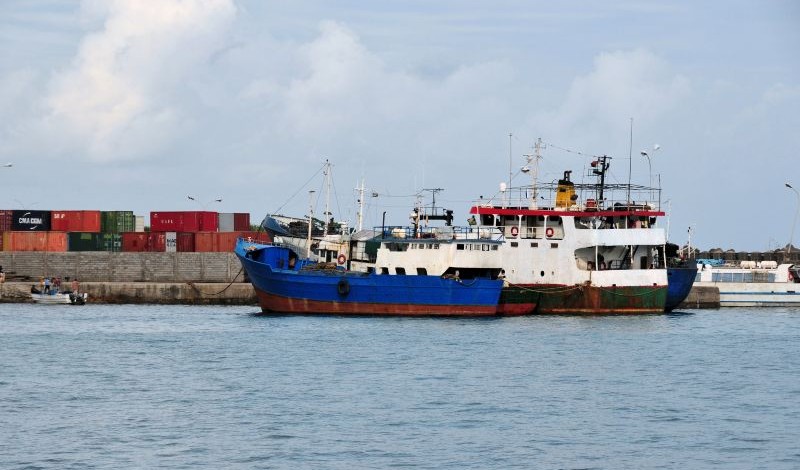
Scholar argues that states may lawfully refuse to recognize flags that shelter a shadow fleet.
When a tanker carrying sanctioned Russian oil sails under another country’s flag, which country answers for it? The U.S. Congress addressed one piece of that question recently, enacting a law that requires the President to sanction such vessels, the companies that own, insure, or service them, and the foreign ports that let them dock.
The law is the latest in a series of unilateral sanctions aimed at Russia’s “shadow fleet”—vessels that evade existing sanction regimes through falsified information, opaque ownership structures, and operations under cooperative flag States, the countries under whose flag a vessel is registered and entitled to sail.
In a recent article, Eduardo Cavalcanti de Mello Filho, a law professor at University College London, argues that states have the right to refuse to recognize such “flags of deceit.” The shipping journal Lloyd’s List coined that term for flag states whose “conscious intent is to enable the operation” of a shadow fleet. Mello Filho grounds this right in each state’s interest in protecting its own rights and public order at sea.
Under the United Nations Convention on the Law of the Sea (UNCLOS), which governs conduct at sea, a ship in international waters answers only to its flag state. Refusing to recognize a flag of deceit would not strip a ship of its nationality. It would instead deny the flag-state exclusive authority over the ship, allowing those states to enforce their own laws against the vessel.
Mello Filho argues that a flag state’s exclusive authority comes with a duty to police its ships, which UNCLOS called “effective control.” He contends that the debate over this duty should shift from a flag state’s ability to exercise effective control toward its “willingness to exercise effective control over its ships.”
He traces the former to questions of whether smaller or resource-constrained national ship registries operating “flags of convenience” were able to exercise effective control over foreign-owned vessels flying their flags. Small states such as the Marshall Islands, he argues, have since put those doubts to rest by using technological innovation and now operate responsible registries despite limited resources.
For Mello Filho, a flag state’s willingness—rather than its ability—to exercise control over vessels flying its flag is the main constraint on flag-state accountability under UNCLOS.
Pointing to nations such as Gabon, Cameroon, Comoros, and the Cook Islands, he argues that states operating flags of deceit deliberately intend to enable dark-fleet operations, presenting a problem that the ability-based framework cannot address. He illustrates that gap with M/V Saiga (No. 2), a decision by the International Tribunal for the Law of the Sea, an independent court that UNCLOS established to resolve disputes over the treaty’s meaning.
In Saiga, the Tribunal concluded that UNCLOS’s requirement of a “genuine link” between a ship and its flag state does not give other states a legal basis to challenge a ship’s registration. Read that way, a state that suspects another of failing to police its ships can do little more than report the problem to that state.
Mello Filho reads Saiga more narrowly. He argues that the Tribunal blurred two issues—whether a registration is valid and whether to recognize a flag—and only ruled out challenges to validity.
He contends that the distinction leaves room for flag non-recognition, provided that states seeking to enforce UNCLOS present factual evidence demonstrating that a flag state is unwilling to “maintain public order at sea.” Before refusing recognition, he argues, enforcer states must undertake a series of preliminary steps.
First, maritime administrations in the enforcer state should contact their counterparts in the flag state and warn them that a shadow fleet vessel is flying its flag. Ideally, the warning would include a report detailing facts showing that the flag state has not effectively controlled the ship as UNCLOS requires.
States should then seek to persuade flag-of-deceit states to deregister shadow vessels or to establish whether they have “conscious intent” to shelter such ships “in blatant disregard of the current rules-based maritime order.”
At the same time, enforcer states should raise the issues through diplomatic channels with their counterparts to mitigate the bureaucratic disconnect between government agencies. Doing so helps ensure that an enforcer state does not conclude prematurely that a flag state was unwilling to enforce UNCLOS.
Mello Filho acknowledges that applying this framework in practice may prove challenging, as may securing flag-state cooperation. Yet he contends that the financial benefits states receive from harboring a shadow fleet are limited, so enforcer state policymakers should not assume flag-state noncooperation.
As an example, he cites the Cook Islands, which recorded one of the world’s largest increases in ship registries in 2024—attributed to the addition of “aging Russian-trading tankers.” That said, the registry’s projected annual increased revenue was limited, “scarcely” enough, by Mello Filho’s account, to cover the legal costs of a challenge brought against the country.
Although legal doctrine supports his approach, Mello Filho concedes it would face practical hurdles. He argues that states should refuse recognition only through procedures that “prioritise fact-finding,” diplomatic engagement information sharing between registries.
He concludes that the maritime community might benefit if international law asked whether flags are willing to control their ships, rather than what they are able to. He argues that shift would distinguish between trustworthy, responsible open registries and registries that shelter shadow fleets.