
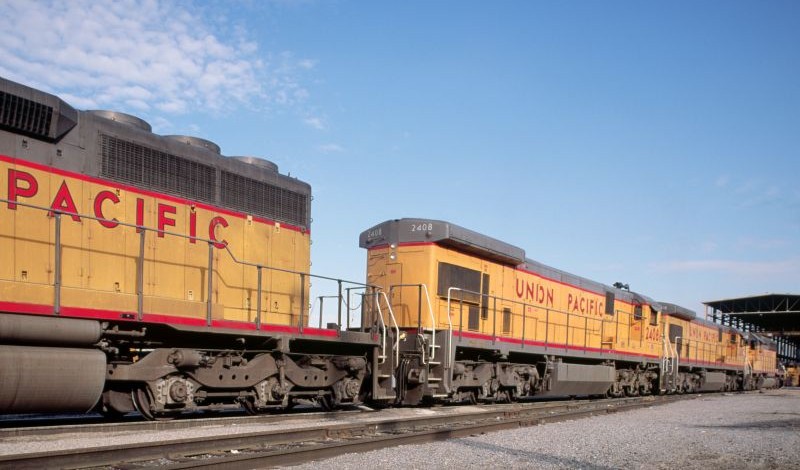
The Union Pacific-Norfolk Southern deal should be evaluated by weighing its potential benefits.
The American Chemistry Council and other major shippers have jointly asked the Surface Transportation Board (STB) to reject the proposed merger between Union Pacific and Norfolk Southern. Shippers and other critics argue that previous railroad consolidation has resulted in higher rates, poorer service and fewer competitive alternatives. These concerns deserve careful consideration. But relying on the history of railroad consolidation risks overlooking a fundamental feature of the proposed transaction—Union Pacific and Norfolk Southern operate largely complementary networks.
The STB accepted the railroads’ revised merger application for consideration in May 2026 after rejecting their original application as incomplete. The Board also required additional information before proceeding with its review.
As the STB considers the transaction, it should focus on the effects of this particular merger rather than presume that the consequences of earlier railroad consolidation will recur. Past railroad mergers provide an imperfect comparison because consolidation can take different forms. When two railroads compete to move freight between the same origins and destinations, their merger can eliminate a competitive alternative. Shippers may then face higher prices or poorer service.
Union Pacific and Norfolk Southern present a somewhat different case. Union Pacific primarily serves the western United States, while Norfolk Southern primarily serves the eastern United States. Their networks have relatively little direct overlap. Consequently, the merger appears unlikely to eliminate head-to-head competition over most of the combined network.
That distinction matters because combining complementary networks can create efficiencies that may be less important in a merger between direct competitors. Today, freight traveling between many points in the eastern and western United States must be transferred from one railroad to another. These interchanges create transaction costs and opportunities for delay. Independent railroads must coordinate schedules, equipment, information, and responsibility when problems occur.
Union Pacific and Norfolk Southern argue in their revised application that eliminating interchange handoffs on thousands of routes would produce faster and more reliable service. According to these two railroads, interchange handoffs can add about 24 hours to some shipments. A single railroad could coordinate shipments over the entire route rather than relying on arrangements between separate companies.
If those service improvements materialize, they could also strengthen railroads’ ability to compete with long-haul trucking. Union Pacific and Norfolk Southern contend that single-line service would cause some freight now moving by truck to shift to rail. Indeed, the STB’s own merger policy recognizes that the railroad industry is part of a broader transportation infrastructure that includes highways and waterways. Its rules acknowledge that railroads face “vigorous intermodal competition” from motor and water carriers in particular markets.
Regulators therefore should not automatically equate fewer railroad companies with less competition in freight transportation. The relevant question is whether shippers will have meaningful competitive alternatives after the merger. On some routes, the important alternative to one railroad may be another railroad. On others, trucks, short-line railroads, transloading, or other transportation options may constrain prices and service.
None of this establishes that the Union Pacific–Norfolk Southern merger will benefit every shipper. Even an end-to-end transaction—a merger of two companies operating in different territories to create a network that covers both territories—can create competitive problems. The STB’s merger rules explicitly recognize that end-to-end mergers can reduce competition in particular geographic and product markets. Some shippers depend heavily on rail transportation and have few realistic alternatives. The Government Accountability Office has long identified concerns about “captive” rail shippers that lack effective transportation alternatives.
Changes in gateways or routing practices could disadvantage competing railroads or customers. And integrating two enormous networks could produce serious service disruptions even if the merger eventually generates efficiencies. The STB’s merger rules specifically identify integration-related service disruptions as a risk that the Board must consider.
Where the Board identifies specific risks, targeted conditions for the approval of a merger may provide a better response than rejecting the transaction outright. The STB’s merger rules expressly contemplate conditions designed to preserve or enhance competition. Protections at the gateways where railroads connect to preserve choice of carrier, reporting requirements, service benchmarks, or other remedies could preserve competitive alternatives while allowing efficiencies from network integration to occur.
Union Pacific and Norfolk Southern have already proposed some steps to address competitive and other risks the STB is concerned about. In their July supplemental filing, they added commitments intended to protect customers and address concerns raised during the STB’s initial review.
Empirical evidence demonstrates that with end-to-end mergers, eliminating costly interchanges reduces costs significantly with only a modest increase in markups. Prices fall because the increases in markups are less than the cost reductions. Most mergers that have occurred since partial railroad deregulation in 1980 have been between railroads with few overlapping routes and have resulted in cost savings.
The proposed Union Pacific–Norfolk Southern merger therefore presents the STB with a broader regulatory challenge. Its major-merger rules require the Board to determine whether substantial and demonstrable public benefits—such as improved service, enhanced competition, and reduced costs—outweigh anticompetitive effects, potential service disruptions, and other harms.
For this merger, that means asking where competition would disappear, where network efficiencies would arise, and whether targeted remedies can address the former without sacrificing the latter. Those questions offer a more useful basis for deciding the merger than the simple observation that railroad consolidation has caused problems before.