Scholars propose regulations to leverage the benefits of robotaxis while managing the risks.
In cities throughout the United States, robotaxis—autonomous, on-demand vehicles—are now commonplace.
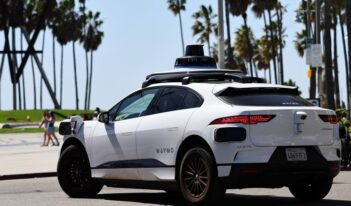
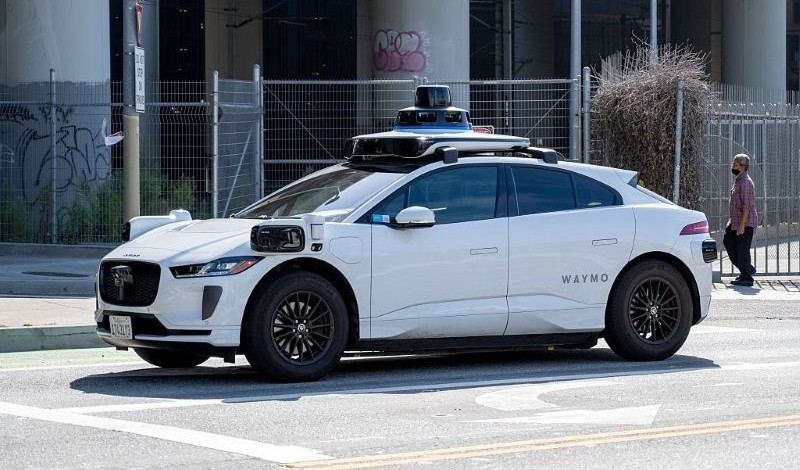
The leading robotaxi company, Waymo, provides more than 250,000 rides each week and already holds a 22 percent share of the digital ride-hailing market in San Francisco. Other companies, such as Zoox, are testing robotaxis in select U.S. cities, while Tesla claims to be developing its own robotaxi service. As these companies expand nationwide, how should policymakers begin to regulate robotaxis?
Law professors Smith and Wansley identify several potential benefits of robotaxis. Robotaxis could enhance road safety and expand mobility for people who cannot drive because of cost, disabilities, or other barriers. They may also help cities use land more efficiently, because declining parking demand would free up space for sidewalks, bicycle lanes, parks, homes, and businesses.
Smith and Wansley also emphasize an underappreciated benefit of robotaxis—they create a way to implement transportation policies that many voters oppose. Measures that address crashes, pollution, and sprawl—such as higher insurance minimums, increased taxes, or higher parking rates—often face resistance when they target individual drivers. Instead, policymakers may find it easier to apply similar requirements to the small number of robotaxi firms.
Still, they warn that robotaxis pose several risks. Robotaxis would generate harmful side effects including additional pollutants, road deterioration, and traffic congestion.
To address these harms, Smith and Wansley recommend that policymakers require all robotaxis to use electric or alternative fuel sources to limit emissions, impose a per-mile charge to reduce road wear, and support congestion-pricing programs that charge robotaxi companies for entering high-demand areas to curb traffic congestion.
Smith and Wansley also caution against a “hidden” negative externality—an increased loss of privacy. Although robotaxi sensors capture only what is visible from public spaces, they argue that the scale of data collection creates substantial risks. If robotaxis become popular, their sensors could record public environments almost continuously, making surveillance inescapable.
Robotaxi companies may even function as informal extensions of law enforcement, according to Smith and Wansley. For example, after a Cybertruck exploded in Las Vegas, Tesla provided vehicle and network data to law enforcement. Other companies, including Waymo, have shared data in similar circumstances.
Although robotaxi companies claim that they release data only when legally required, Smith and Wansley explain that these companies have strong incentives to maintain good relationships with law enforcement. They note that although policymakers should address these issues as part of a broader privacy framework, in the meantime, they should scrutinize robotaxi data practices.
Smith and Wansley posit that these negative externalities extend to non-users as well. A disabled rider could lose access to mass transit systems that meet federal accessibility standards if privately owned robotaxis displace public transit. Food prices could rise if increased sprawl reduces arable land. And broad sensor-data sharing could expose non-riders to more private and governmental surveillance.
Smith and Wansley also identify an often overlooked risk—increased market concentration. A small number of robotaxi companies could come to control large portions of the transportation system. Although ride-hailing services such as Uber and Lyft compete with each other and with taxis and public transit, robotaxis may be more likely to displace these transportation modes.
This risk grows because three of the world’s most valuable corporations—Google, Amazon, and Tesla—back the three major U.S. robotaxi developers: Waymo, Zoox, and Tesla’s own robotaxi program.
To promote competition, Smith and Wansley recommend open entry and bans on contracts that lock in riders to a specific service. More competition would reduce fares, improve service, and promote innovation.
They caution, however, that these measures may not be enough. In the event of a potential “robotaxi monopoly,” they propose transparent, rider-neutral fare structures and emergency planning requirements that ensure robotaxi fleets support state emergency plans. This approach would allow policymakers to protect the public from monopoly abuse while also promoting competition.
Smith and Wansley acknowledge that advocates remain skeptical of robotaxis and share some of those concerns. “Automated driving is like the internet—a tool that opens up possible futures, some better and some worse,” they write. Nonetheless, Smith and Wansley conclude that properly regulated robotaxis “can liberate cities from the worst effects of the automobile—save lives, expand mobility, and free up urban land.”