
Scholars evaluate the impact of federal student loan policy.
One in six U.S. adults has federal student loan debt. The growing national balance now exceeds $1.8 trillion, with 10 percent of loans going unpaid at the end of 2025. The rate of student loan debt growth outpaces that of tuition costs. In response to rising balances, the Trump Administration announced several changes it plans to make to federal student loan policy as part of the One Big Beautiful Bill Act. These changes include capping the amount that students can borrow and eliminating the Grad PLUS Program, which allows graduate and professional students to borrow up to the full of cost their programs.
The Trump Administration’s student loan overhaul, which is set to take effect in July 2026, marks the end of key Biden-era initiatives such as the SAVE Plan. A district judge recently invalidated the rule authorizing the Plan, which allowed borrowers to make payments based on their income and family size. Under the plan, borrowers who fail to switch to one of the Administration’s alternative plans within two years will see their loan balances balloon with interest.
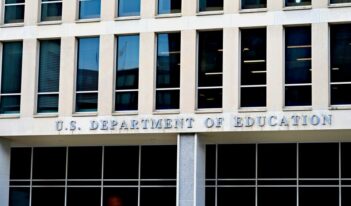
In the United States, the Higher Education Act (HEA) governs federal student loans, which are administered by the Department of Education. Many American borrowers struggle to navigate the complicated scheme of repayment plans, forgiveness programs, and servicing rules. Proponents of the Trump Administration’s new rules argue that the current system is overly complex and in need of streamlining. At the same time, some legal experts emphasize that complexity is the inevitable result of structuring programs to appropriately accommodate the full diversity of borrowers and circumstances.
Undergraduate and graduate students from a variety of backgrounds incur educational debt for myriad reasons. About half of undergraduates take out some form of federal loan, with middle-income students being most likely to borrow from the federal government. Women with bachelor’s degrees borrow at higher rates than men and hold almost four percent more debt than their male counterparts.
In addition to gender discrepancies, there exists racial discrepancies in federal education borrowing. Black undergraduate students are more likely than their white classmates to take out federal loans, and they owe an average of $25 thousand more than their white classmates four years after graduation. Black graduate students also borrow at higher rates – 40 percent compared to 22 percent of white students seeking advanced degrees. Experts warn that these disparities exacerbate wealth disparities between racial groups.
Proponents of the new Trump administration student loan policy contend that limiting how much debt individuals can borrow will make successful loan repayment more likely and dissuade universities from raising tuition. Critics, however, emphasize that the changes may make it harder for low-income students to enter professions such as medicine and the law. Experts predict that low and middle income students will turn to private loans to supplement their educational expenses. Analysts warn, however, that private lenders may be reluctant to lend to students in precarious financial situations.
In this week’s Saturday Seminar, experts evaluate the impact of federal student loan policy on various demographics and professions.
- America’s student loan system has led disadvantaged and historically underrepresented facing high costs, variable educational quality, and inequity in who goes to college and graduate school, contends Adam Looney of The University of Utah and Constantine Yannelis of The University of Chicago in a Journal of Economic Perspectives article. Looney and Yannelis acknowledge that labor market outcomes of groups who attained degrees in the last 20 years are strong, but significant problems of program quality and cost remain largely unaddressed by policymakers. To remedy these problems, Looney and Yannelis propose financial aid policies targeted to prospective students based on need, to institutions based on student outcomes, and to borrowers based on their post-college earnings.
- The student debt system perpetuates structural racism and sexism, argue Ali Mir of the William Paterson University College of Business and Saadia Toor of the College of Staten Island in a Journal of Business Ethics article. They contend that increased wages for college graduates led policymakers to view student loans as lucrative individual investments, the returns of which eliminate the need for government assistance. In turn, starting in the 1970s, states cut higher education funding, explains Mir and Toor. They recount how, amid climbing tuition, amendments to HEA undermined consumer protections for student loans. Noting that Black students and Black women in particular are disproportionately harmed by the student debt crisis, Mir and Toor urge student debt forgiveness.
- In an article in Critical Education, Saralyn McKinnon-Crowley and Sarah Harris of Baylor University argue that poor program design has prevented most public service workers from receiving student loan forgiveness under the Public Service Loan Forgiveness program. They point to a 2018 Government Accountability Office report showing that confusing, fragmented guidance left loan servicers and borrowers unable to navigate the program. McKinnon-Crowley and Harris also note that President Trump’s 2025 Restoring Public Service Loan Forgiveness executive order narrowed the range of qualifying employers, putting debt relief out of reach for many borrowers. McKinnon-Crowley and Harris conclude that these repeated implementation failures reveal a broader policy failure to treat student debt relief as a serious priority.
- A federal student loan relief program meant to help public servants is instead leaving many borrowers stressed and struggling, argue Daniel Collier of the University of Memphis and Dan Fitzpatrick of the University of Michigan in a working paper. The Public Service Loan Forgiveness program promises to cancel remaining student debt for government and nonprofit workers after ten years of payments—yet over 99 percent of early applicants were rejected, Collier and Fitzpatrick note. Collier and Fitzpatrick find that the stress of carrying large loan balances harms borrowers’ happiness and mental health, though anxiety eases as forgiveness draws closer. Collier and Fitzpatrick recommend granting partial forgiveness at intermediate milestones and improving how the government communicates program progress to enrollees.
- In an article in Perspectives on Politics, Mallory E. SoRelle of Duke University and Serena Laws of Trinity College analyze public perceptions about the deservingness of student loan borrowers. SoRelle and Laws point out that student borrowers are diverse, varying widely with respect to age, income, and profession. SoRelle and Laws emphasize that individual and situational characteristics, such as how responsible the person is perceived to be for their situation, and how great their perceived need is, affect perceptions of deservingness in social policy. Although these attributes play a central role in how people evaluate individuals deserving of government assistance, they may not translate to broader arguments for or against student debt forgiveness, SoRelle and Laws conclude. They therefore recommend against framing student loan forgiveness policy in terms of desert.
- In an article, Jacob Goss of the University of Wisconsin his coauthors find that President Biden’s 2022 student loan forgiveness proposal would have most benefitted younger borrowers with lower credit scores living in lower and middle income neighborhoods. The Goss team contends that, though the proposal would have distributed less benefit to low-income areas than the Earned Income Tax Credit, it would have been more redistributive than the Child Tax Credit. The Goss team argues that Black and Hispanic borrowers would have disproportionately benefited from the proposal. Specifically, the Goss team calculates that Black borrowers would have owed the most, and that Hispanic borrowers would be most likely to have their balances entirely forgiven.