
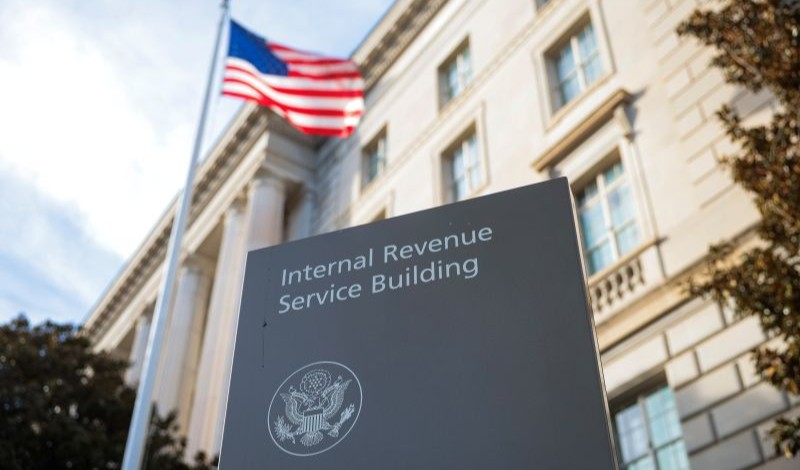
IRS budget cuts sabotage global financial crime-fighting.
When the U.S. Congress rescinded over $40 billion in funding appropriated to the Internal Revenue Service (IRS) through the Inflation Reduction Act, lawmakers likely imagined they were trimming bureaucratic fat. They were actually dismantling a decade of painstaking international cooperation that has become Western countries’ primary bulwark against cryptocurrency fraud, sanctions evasion, and cross-border money laundering.
IRS Criminal Investigation, a division of the IRS, anchors the Joint Chiefs of Global Tax Enforcement (J5), an alliance between the United States and Australia, Canada, the Netherlands, and the United Kingdom, which targets financial crimes that no single nation can tackle alone. Formed in 2018 after the Panama Papers exposed the infrastructure of global tax evasion, the J5 pursues terrorists, drug traffickers, and cybercriminals alongside garden-variety tax cheats. Congressional budget battles now threaten to defund America’s seat at this table precisely when cryptocurrency and artificial intelligence have made international coordination indispensable.
The numbers sketch a stark portrait of institutional decline. IRS Criminal Investigation referred just 1,794 cases for prosecution in fiscal year 2024—fewer than at any point since the early 1980s, when the division employed half as many agents and investigated a far simpler financial landscape. Prosecutors accepted only 1,669 cases, about half of the number accepted in 2014. This collapse reflects not shrinking crime but shrinking capacity: The special agent workforce hemorrhaged from 4,000 in 2010 to under 2,900 by 2020.
The Inflation Reduction Act briefly stanched the bleeding. IRS Criminal Investigation’s workforce expanded by 11 percent in fiscal year 2024, and investigators identified $9.1 billion in fraud. But even at 3,300 personnel—including roughly 2,200 special agents—the division remains badly understaffed. Another $20 billion in proposed cuts would force the agency to layoff agents just as they complete the 18-to-24 months of training required before they can work cases independently. Former IRS commissioner Danny Werfel has stopped mincing words: Maintaining current operations will become impossible.
The J5 exists because organized crime syndicates long ago figured out that national borders make excellent shields. They hire lawyers and accountants in multiple jurisdictions, route money through shell companies in secrecy havens, and exploit the fact that law enforcement agencies rarely share information across borders. The J5’s innovation lies in connecting data systems from five countries without surrendering sovereignty, creating a federated intelligence network that reveals patterns invisible to any single nation.
That architecture delivered results in July 2025, when J5 coordination helped indict the founders of OmegaPro, a cryptocurrency company, for operating a $650 million cryptocurrency pyramid scheme. The defendants allegedly promised 300 percent returns through trading by “elite traders,” then spent investor funds on Dubai luxury events where they projected the OmegaPro logo onto the Burj Khalifa. Victims across dozens of countries watched their savings evaporate while the founders flaunted designer watches on social media.
Prosecuting OmegaPro required investigators from the Federal Bureau of Investigation, IRS Criminal Investigation, and the U.S. Department of Homeland Security to coordinate with attachés from cities such as Bangkok, London, and New Delhi and all five J5 member nations. The case exemplifies modern financial crime: Cryptocurrency payments obscure money flows, victims scatter across continents, and perpetrators exploit regulatory arbitrage between jurisdictions. No single agency possessed the jurisdiction, resources, or technical capacity to unravel the scheme alone.
The J5 has replicated this model across more than 50 investigations, including the $4.3 billion Binance settlement for Bank Secrecy Act violations. Through annual “Cyber Challenges,” specialists from all five nations probe cryptocurrency blockchains and darknet marketplaces, developing techniques to pierce the anonymity that criminals depend on. The J5 Cyber Group currently pursues over 30 major investigations, each demanding blockchain forensics, multi-jurisdictional legal coordination, and real-time intelligence sharing.
IRS Criminal Investigation also convenes the annual Global Financial Institutions Partnership Summit, which brought over 100 participants to Ottawa in October 2024 to address trade-based money laundering. These public–private collaborations help banks and payment processors identify suspicious transactions before criminals move money offshore. The entire ecosystem depends on the IRS maintaining 11 attaché posts worldwide—expensive infrastructure that funding cuts put on the chopping block.
Budget instability doesn’t just reduce headcount. It corrodes in subtler ways. IRS Criminal Investigation spent $176 million from the Inflation Reduction Act in fiscal year 2024, mostly on technology and training. Agents need blockchain analysis software, darknet monitoring tools, and artificial intelligence systems to match criminals who exploit the same technologies.
More problematically, enforcement collapses undermine deterrence. When criminal referrals hit 40-year lows, sophisticated tax evaders and their advisors notice. The odds of avoiding consequences have never been more favorable. Former deputy attorney general Rod Rosenstein warned that such low prosecution numbers threaten the voluntary compliance upon which the entire tax system depends. Tax law works because most Americans assume cheaters eventually get caught. When enforcement is publicly reduced, that assumption falters.
The international dimension compounds the problem. The Organisation for Economic Co-operation and Development called for enhanced cooperation against tax crime enablers, prompting the J5’s creation. The United States led that effort, recognizing that cryptocurrency and cybercrime demand coordinated responses. Walking away now, not through deliberate policy choice but through budget attrition, would abandon partners that have invested heavily in joint operations. It would signal that the United States no longer considers international financial crime cooperation a priority.
Funding IRS Criminal Investigation adequately means finding money elsewhere or accepting larger deficits. The Congressional Budget Office estimates high returns from IRS enforcement spending, but those gains accrue over years while appropriations battles play out quarterly.
At present, IRS Criminal Investigation cannot maintain domestic operations, preserve international attaché posts, invest in emerging technology, and train new agents. Something must give. When it does, experienced investigators will leave for better-funded agencies, international partners will pursue cases without American participation, and financial criminals will calibrate their risk assessments accordingly.
The current path leads nowhere productive. The J5’s success demonstrates what coordinated enforcement can achieve. The question is whether the United States will continue supporting this model or allow funding constraints to undermine a decade of relationship-building and operational progress. The answer will shape not only tax administration but also the United States’s role in global efforts against financial crime.