
Nonprofits sue EPA over rescission of endangerment finding, President Trump orders domestic production of herbicides, and more…
IN THE NEWS
- A coalition of public health and environmental organizations sued the U.S. Environmental Protection Agency (EPA) after the agency rescinded its 2009 finding that greenhouse gases threaten public health and welfare. The lawsuit reportedly argues that EPA’s rescission of the finding—which underpinned federal climate regulations for motor vehicles, power plants, and other pollution sources—is unlawful under the Clean Air Act and disregards nearly two decades of scientific evidence. Supporters of the repeal, including President Donald J. Trump and EPA Administrator Lee Zeldin, described the action as curbing federal overreach, while the coalition contends that the action destabilizes longstanding regulatory safeguards.
- President Trump signed an executive order to increase U.S. production of elemental phosphorus and glyphosate-based herbicides, chemicals used in both military equipment and agricultural weed-killers. The order directs the federal government to prioritize contracts and direct resources to ensure that these materials remain available, adding that companies complying with the order will receive certain legal protections for actions taken to follow the order. The Trump Administration argued that relying on foreign countries for these supplies could threaten national security and food production. Critics, including health advocates and environmental groups, reportedly argued that the order protects pesticide manufacturers at a time when glyphosate products face thousands of lawsuits alleging links to cancer and other health risks.
- President Trump stated that the Federal Emergency Management Agency will assist with a sewage spill cleanup along the Potomac River. More than 240 million gallons of untreated sewage spilled when a wastewater pipe burst last month. The pipe services Washington, D.C., Maryland, and Virginia. Although the spill occurred in Maryland, DC Water operates the pipe, and the affected section is located on federal property. DC Water has so far led the cleanup and stated that, since February 1, bacteria levels have largely remained within the Environmental Protection Agency’s “acceptable range” for recreation. The environmental nonprofit Potomac Riverkeeper Network, however, conducted its own sampling on February 3 that showed bacteria levels 4,227 times above the safe limit.
- The U.S. District Court for the Eastern District of Texas struck down a 2024 rule from the U.S. Federal Trade Commission (FTC) that expanded reporting requirements for proposed mergers. The rule required merging companies to submit significantly more information—including additional details about corporate structure, strategy, and ownership—before completing large mergers. Judge Jeremy D. Kernodle found that the FTC failed to demonstrate that the rule’s benefits would outweigh its costs, as statutorily required. The court stayed its order for seven days to allow the FTC to seek emergency relief, and the agency reportedly stated that it was reviewing the decision and weighing its options.
- A senior judge in the U.S. District Court for the Eastern District of Pennsylvania ruled that the National Park Service (NPS) must restore an exhibit on slavery at the President’s House Site at Independence National Historical Park in Philadelphia. Judge Cynthia M. Rufe referenced George Orwell’s novel 1984 in her order and found that the Department of the Interior does not have the authority “to dissemble and disassemble historical truths.” The City of Philadelphia, which was responsible for co-managing the site with the NPS, sued after the NPS removed exhibits that described the lives of enslaved people working under the presidential administrations of George Washington and John Adams.
- A federal judge barred U.S. Immigration and Customs Enforcement (ICE) from re-detaining Kilmar Armando Abrego Garcia, who was erroneously deported to El Salvador last year. U.S. District Judge Paula Xinis held that the government’s 90-day window to hold him while arranging deportation has already run out. She also ruled that government officials have not shown they can deport Abrego Garcia anytime soon. The judge criticized the government for making repeated threats to remove him to several African countries with little chance of success, while ignoring Costa Rica, which has offered to accept him and to which he has agreed to be deported.
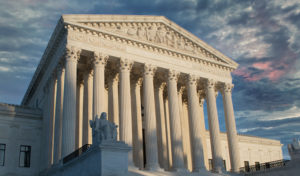
- The U.S. Supreme Court announced it will be using a new, in-house software to run automated recusal checks to help flag potential conflicts of interest for the justices. The changes, which require litigants to list stock ticker symbols for parties in a case when applicable, take effect March 16, 2026, and are intended to supplement the Court’s existing conflict-screening practices. Fix the Court, a court transparency advocacy group, reportedly called the change modest, arguing that the new requirements leave the Court’s ethics largely self-policed, and urged broader reforms, including limits on individual stock ownership and an enforcement mechanism for the Court’s Code of Conduct, which was adopted in 2023.
- The Federal Acquisition Regulatory Council, led by the Office of Federal Procurement Policy, proposed amending the Federal Acquisition Regulation to restrict the federal government’s purchase of certain electronics that include “covered semiconductor products or services,” starting December 23, 2027. The proposal targets semiconductors tied to specific Chinese manufacturers, as well other entities that the U.S. Department of Commerce or the U.S. Department of Defense determine are connected to a “semiconductor foreign country of concern,” which includes North Korea, China, Russia, and Iran. The rule would require companies bidding for federal contracts to check for banned semiconductors and certify they comply.
WHAT WE’RE READING THIS WEEK
- In a recent Brookings Institution report, Nicol Turner Lee and Darrell M. West of the Center for Technology Innovation at Brookings argued that legally binding community benefits agreements (CBAs) can help developers and local municipalities alleviate concerns around proposed data centers. Lee and West reviewed existing CBAs and found that the most robust agreements prioritized transparency, affordability, and sustainability in local communities. Lee and West claimed that provisions detailing how companies will establish community funds, upkeep infrastructure, source local labor, and use their fair share of water and electricity are essential. They also emphasized the need for policymakers to carefully consider tax abatements offered to developers. Lee and West argued that ensuring transparency through frameworks that provide for enforcement actions, such as lawsuits or fines, is particularly important for holding projects accountable.
- In a recent report, the U.S. Government Accountability Office (GAO) found that the U.S. Department of Energy lacks a plan to oversee billions of dollars in clean energy projects. GAO explained that the department’s Office of Clean Energy Demonstration lost about 85 percent of its staff in 2025 and issued stop-work orders on most of its supporting contracts. GAO warned that as a result, the department is unlikely to conduct in-depth oversight reviews and may struggle to manage projects that have already received over $18 billion in commitments. GAO recommended, and the Department of Energy agreed, that the Secretary of Energy should develop a formal plan to ensure that the department can meet its obligations.
- In a Washington and Lee Law Review article, Daniel Schwarcz, a professor at the University of Minnesota Law School, Tom Baker, a professor at the University of Pennsylvania Carey Law School, and Kyle D. Logue, a professor at the University of Michigan Law School, argued that U.S. rules have not adequately addressed the risks of generative-AI “robo-advisors” that recommend investments and portfolios to consumers. They explained that AI-powered advisors could expand access to personalized guidance but also scale misleading, conflicted recommendations across millions of consumers. Drawing on consumer-finance principles and the EU AI Act, they proposed licensing for higher-risk robo-advisors, plus stronger duties of care and loyalty for automated advice tools.
EDITOR’S CHOICE
- In an essay for The Regulatory Review, Jeffrey Czajkowski, director of the Center for Insurance Policy and Research, Kevin Simmons, a professor at Austin College, and James Done, a senior scientist at the University Corporation for Atmospheric Research, argued that strong building codes provide benefits that far exceed their costs, especially following natural disasters. Czajkowski, Simmons, and Done reviewed data from jurisdictions with strong building codes and found that the reduction in damage after natural disasters significantly outweighed the cost of the regulations, with benefits exceeding costs by 2.67 to 7.93 times over. They concluded that strengthening building codes should be a long-term priority, even when policymakers otherwise focus on deregulation.