Scholar contends that face scans at airports risk coercing consent and perpetuating bias.
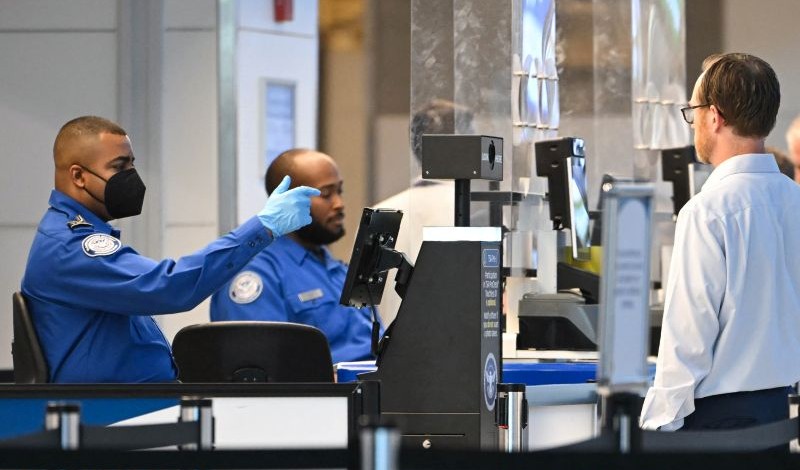
As part of security screenings nationwide, air travelers in the United States are increasingly asked to stand before cameras that match their faces with their driver’s licenses or passports. The Transportation Security Administration (TSA) promotes these scans as both efficient and secure.
But McKenly Redmon of Southern Methodist University Dedman School of Law argues in a recent article that these biometric screenings threaten privacy, fairness, and civil liberties. Noting that TSA plans to expand the use of the technology, which is already operating at many airports nationwide, Redmon suggests that stronger oversight is needed to protect civil rights.
Redmon explains that the TSA deploys so-called credential authentication technology–2 scanners, which capture real-time images and compare them against government-issued IDs. The TSA states that these scans are optional and that, except in limited cases, it deletes the photos. By automating identity checks, the agency maintains that security improves and bottlenecks shrink.
Yet Redmon finds that passengers’ ability to decline these scans often exists only in theory. He argues that travelers are likely unaware that they can opt out, and signage at airports frequently uses vague terms such as “biometric identity technology” instead of plainly stating “facial recognition.” Accounts collected by the Algorithmic Justice League alleged that most passengers receive little or no notice about their ability to refuse face scans. Redmon stresses that the combination of ambiguous signage and officer pressure undermines informed consent.
Redmon also raises accuracy and fairness concerns. Although the TSA has pledged to test its facial recognition technology across demographic groups, Redmon notes that the agency has not disclosed performance data separated by race, gender, or age. Independent research reveals that facial recognition systems misidentify women and people of color at disproportionately higher rates. Redmon underscores that even small error rates can produce thousands of false matches daily when applied across hundreds of airports. Without transparency on demographic performance, travelers cannot meaningfully assess their risk of misidentification, Redmon contends.
She situates the TSA’s program within broader concerns about governmental surveillance. She notes that critics of facial recognition technology warn that building a national biometric system could create the infrastructure capable of tracking individuals beyond airport checkpoints. Unlike passwords or credit card numbers, biometric identifiers cannot be changed if compromised. Redmon argues that embedding facial recognition into routine travel procedures risks conditioning Americans to accept biometric tracking in other contexts. She cautions that tracking infrastructure may be repurposed for law enforcement or immigration monitoring, blurring the line between aviation security and wider governmental surveillance.
The TSA grounds its biometric push in the post-9/11 imperative to make air travel safer for passengers. Between 2004 and 2020, 262 individuals with fraudulent documents were caught at airport security. Redmon acknowledges the agency’s interest in moving travelers efficiently through the checkpoint and notes that the COVID-19 pandemic accelerated interest in contactless facial verification.
Despite recognizing potential benefits from digital facial verification, Redmon raises Fourth Amendment questions about whether the scans count as unreasonable governmental searches. She explains that TSA officers are not law enforcement officials and that the agency functions mainly as a security screener. This distinction matters because the Fourth Amendment restricts the power of law enforcement to search people, but courts often give more leeway to administrative agencies that conduct routine security checks, Redmon emphasizes. Supporters of face scans argue that the measure is constitutional because it is optional, and the TSA says that it deletes most images quickly.
But Redmon notes that opting out may not be truly voluntary when travelers are warned of delays, and that storing images “for evaluation” prompts concerns about whether the TSA keeps personal data for longer than necessary. She argues that persistent problems with accuracy, transparency, and notice make it difficult for both travelers and courts to judge whether automated identity checks are reasonable under the Fourth Amendment.
The lack of legislation addressing facial recognition at airports makes these constitutional questions harder, Redmon contends. She describes that, without guidance from the U.S. Congress, courts must balance security and privacy on their own, creating uncertainty about how the Fourth Amendment applies to these scans. Redmon notes that, since 2019, lawmakers have introduced bills to pause or block the TSA’s use of facial recognition until it receives explicit congressional authorization. But she adds that these and other proposals that would require clearer consent procedures and stricter limits on data retention have yet to become law.
Ultimately, Redmon emphasizes that effective governance is key. She calls for the TSA to make opt-out notices clear and consistent, train officers to avoid pressuring travelers, publish disaggregated performance data for face scans, disclose which systems are in use, and permit third-party audits. She also underscores active campaigns urging a pause or stronger guardrails on facial recognition technology. For its part, the TSA maintains that facial verification neither alters the nature of checkpoint identity verification nor operates as an overall surveillance tool. The program’s durability will turn on whether the TSA pairs its efficiency claims with verifiable transparency on voluntariness and accuracy, Redmon suggests. She argues that regulating the TSA’s use of facial recognition is not about more than aviation security—it sets a precedent for governing biometric technologies across American society.