When the federal government fails to act, state and private actors can fill the void.
With many federal agencies having incurred drastic cuts, the United States will enter a period of radical experimentation over what can be done with nonfederal capabilities for risk management. That will be the case until the advent of a more friendly presidential administration in 2029—or even after that, due to reduced trust in elites and a more populist approach to politics, as noted by Rob Goble in another essay in this series. Moreover, some previous federal risk-management functions may be difficult or costly to restore due to the loss of institutional memory, obsolete or corrupted databases, or simply the fact that repair is usually more expensive than maintenance. In any event, some previous federal functions had already been overly costly, slow, and burdensome. Such functions may be unnecessary or could be performed better and more successfully elsewhere.
Of course, some problems, such as climate change, may be difficult or futile to address at a less-than-federal level. Fortunately, we already have significant experience with nonfederal experimentation during the COVID-19 pandemic, when the federal government was often slow, unresponsive, or dysfunctional in tackling many aspects of the COVID-19 response.
Perhaps the best example of that was the COVID Tracking Project. This effort involved hundreds of volunteers from March 2020 to March 2021 and was a major source of data on COVID-19 in the United States at a time when the federal government was not collecting such information. As described by Erin Kissane, the managing editor of the project, “When I signed up to volunteer … I thought I’d be doing two hours of work a day for a few weeks. The thing that happened instead was so unlikely and intense that I don’t pretend to understand it … crash-building a highly visible 350-person crisis org for a year is something else.” This project eventually ended after the federal government launched its own data-collection efforts—which are no longer being maintained. Nevertheless, the COVID Tracking Project was a phenomenal example of what can be done with citizen science.
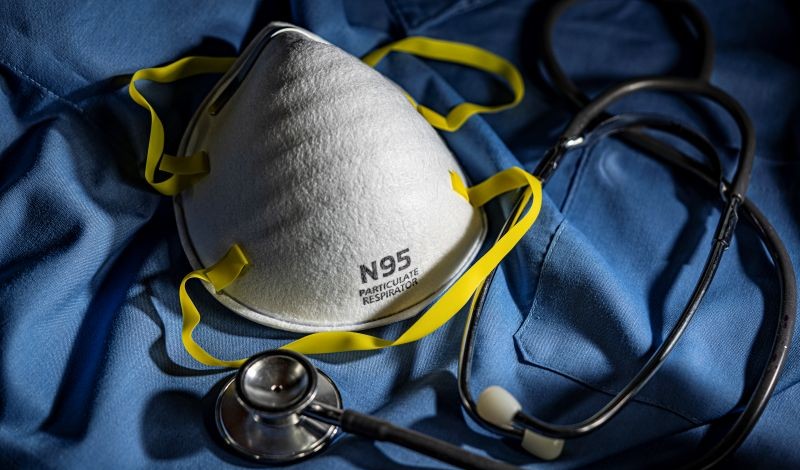
Citizen science has also been important in evaluating the performance of respirators. Although the National Institute for Occupational Safety and Health certifies N95 respirator masks, the criteria for N95s are a floor, not a ceiling, on performance. Actual performance can vary based on face size and shape, length of wear, and activities undertaken. For quite a while during the COVID-19 pandemic, the best source of data on respirator performance was a social media account, @FitTestMyPlanet, which compiled data from testers around the world according to a standard protocol. Although that account is now less active, similar information is now being maintained on a Discord server called Fit Testing for Everyone. Although the information appears to be high-quality and reliable, it does not, of course, come with the same seal of approval as federal public-health information, and many individuals searching for information about respirator performance may not be able to find it readily.
Although not exactly falling in the category of “citizen science,” another ongoing volunteer effort during the pandemic concerned the development of mask blocs in over 100 locales in the United States as well as in others around the world. Mask blocs are mutual-aid groups that distribute mask information, purchase N95 respirators and other types of masks in bulk, or accept donations to distribute masks in their communities. In the aftermath of the Palisades fire, Southern California mask blocs made masks available at a time when more “establishment” organizations, such as the American Red Cross, did not have sufficient stocks of masks.
Other examples of pandemic responses involved privatization—or the performance of risk management functions by private firms. For example, Charity Dean, a former assistant director of the California Department of Public Health founded The Public Health Company in response to excessive government concern about the “optics” and “politics” of infectious-disease notification. This private organization was able to provide honest and accurate disease notification to paying clients, such as the U.S. Department of Defense. A private program of this type, however, is not a full substitute for government public health organizations, since, among other things, the information it provides is available only to individuals or organizations with significant resources.
Another example of privatization involved physician Michael Mina. He left a faculty position at Harvard to take a leadership position at a company that provided at-home medical testing in part because of frustration with how slow the federal government was at rolling out widespread COVID-19 testing.
Nonprofits and philanthropy have also played a role. For example, in 2020, Richard Corsi and James Rosenthal developed a highly effective air purifier that could be used to reduce the risk of COVID-19. It was simple and inexpensive enough for individuals or community organizations to produce on their own from commonly available materials. Subsequently, they established the Corsi-Rosenthal Foundation to use tax-deductible donations to make their filters accessible to groups working with underserved communities.
Academics also have a significant role to play—especially now that both computation and dissemination of information have become much more affordable. Examples of academics leading significant efforts in this regard include: the X account @SolidEvidence run by Marc Johnson at the University of Missouri School of Medicine with philanthropic funding; the Texas Epidemic Public Health Institute, which provides wastewater data on the prevalence of COVID-19; and the Pandemic Mitigation Collaborative, run by Professor Michael Hoerger of the Tulane University School of Medicine, which provides COVID-19 forecasts and risk information. More recently, epidemiologist Caitlin Rivers of Johns Hopkins University has begun a Substack titled “Force of Infection” to provide information on a number of infectious diseases now that federal information sources are increasingly perceived as unreliable.
Finally, state, local, and regional governmental organizations can step in to perform some functions previously performed by the federal government. Examples include the Northeast Public Health Collaborative and the West Coast Health Alliance, which were formed to coordinate public-health guidance, especially involving vaccination, in the face of weakened and less trustworthy federal guidance. In addition, California’s decision to work directly with the World Health Organization after the federal government decided to withdraw falls within this category.
Beyond COVID-19, similar nonfederal initiatives have been observed in the area of emergency planning and response. For example, the nonprofit First Street Foundation took advantage of affordable computation to issue updated flood maps because the Federal Emergency Management Agency (FEMA) had been extremely slow to update its own flood maps in light of new information and changing climates. Similarly, state and local jurisdictions have provided significant enhancements to FEMA resources for home buyouts, increasing the equity of the services available. Academics have also performed a critical role in evaluating the effectiveness of those functions.
Despite these examples of creative, flexible, and nimble approaches to risk management, there are limits to what can be done using some of these approaches. For example, citizen scientists can test the effectiveness of N95 respirators, but cannot easily certify that available products are N95-compliant. That may require either federal inspection of manufacturers and importers or perhaps large-scale commercial partnerships, such as collaborations between manufacturers and distributors. Likewise, state and local jurisdictions may be well placed to address gaps in FEMA buyout policies, such as limits on eligibility and covered services, but they would be hard-pressed to replace FEMA buyout funding if that were no longer available. Finally, I would envision that some functions that are provided by one of the above nonfederal approaches in the near term may someday be federalized—or re-federalized—if program evaluation demonstrates that a particular approach is sufficiently effective and cost-effective that it merits being rolled out to the entire country.
Hopefully, federal guidance on issues such as vaccination and disease prevalence will eventually become more widely trusted—and trustworthy—again. But that may take quite a while, since trust is more easily lost than restored. Until then, learning from nonfederal experiments has the potential to improve federal risk regulation in the long run, with states and other nonfederal organizations serving as laboratories of democracy.

This essay is part of a series titled, “Rebuilding the U.S. Regulatory System.”